
Located within the Shire of Yarra Ranges local government area, Belgrave Heights is a leafy suburb in outer Melbourne on the borderline of the Highlands Southern Fall and Gippsland Plains bioregions.
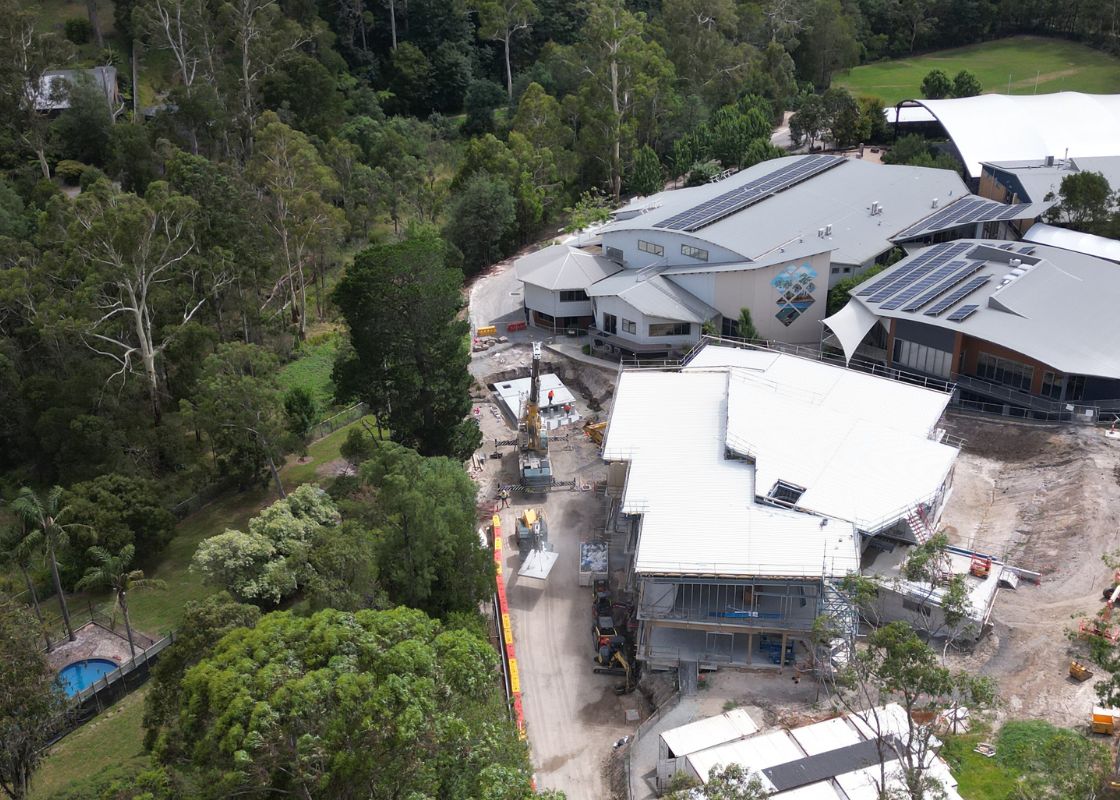
In these vibrant surroundings, Belgrave Heights Christian School is currently undergoing development with the addition of school buildings and education infrastructure to support its senior students.
Managing stormwater runoff is a vital part of these site changes, requiring the installation of high-performance stormwater assets to provide water quality management and on-site stormwater detention (OSD).
Belgrave Heights is nestled among local biodiversity hotspots, including Birdsland Reserve and Monbulk Creek. Conserving these surrounding habitats is essential for local species, which include platypus, echidnas, and wombats. The development of best-practice stormwater infrastructure is vital to protecting Joy in Water for future generations and will assist the site in meeting its sustainability obligations and regulatory objectives.
Underground Installation: Maximising Space with 75,000L MegaVault OSD
School infrastructure projects present unique challenges in stormwater design, with runoff generated by extensive pedestrian areas, car parks, courts, and roofing. Managing stormwater across these sites requires a combination of water quantity and quality infrastructure to control peak stormwater flows and capture pollution.
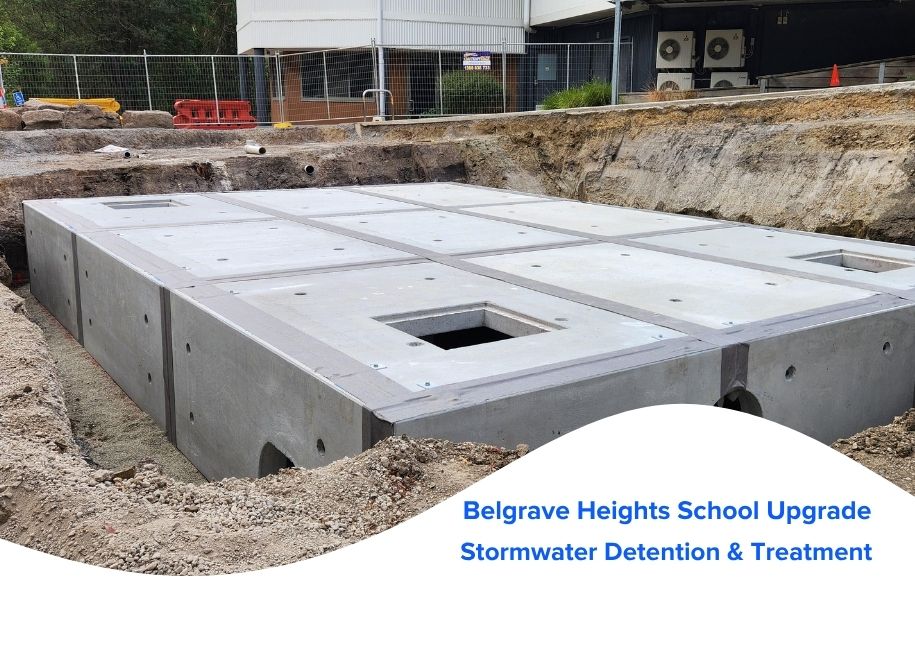
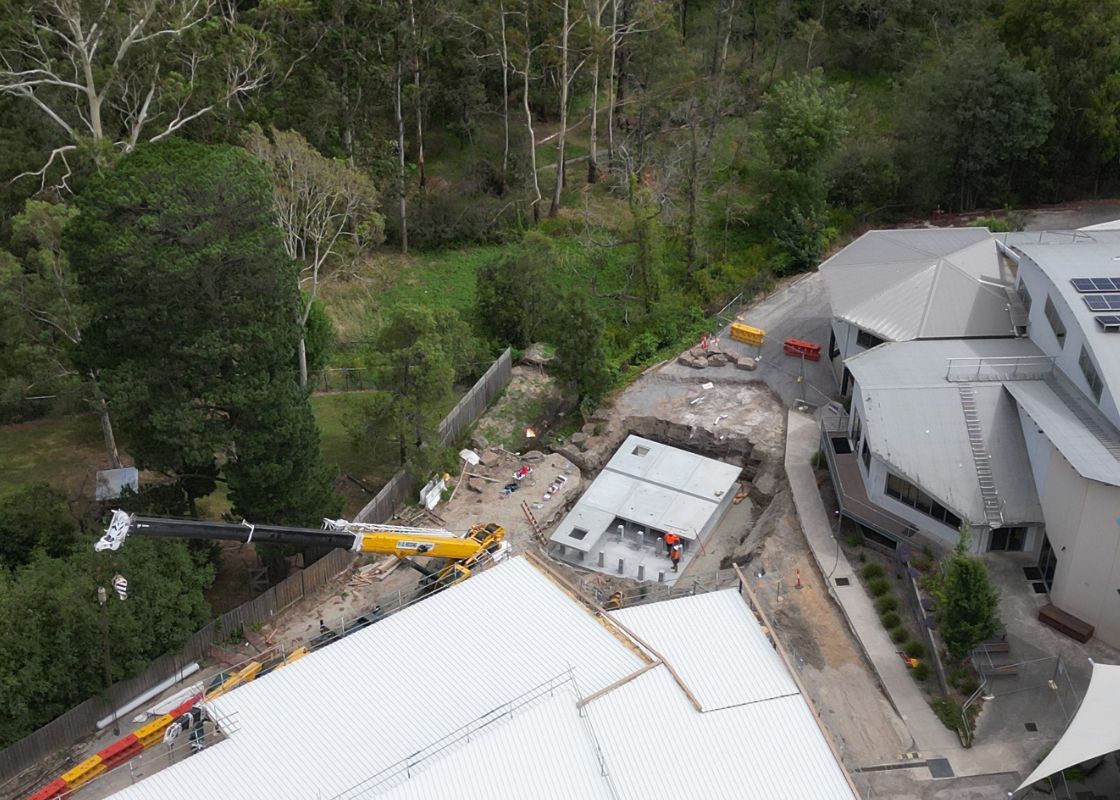
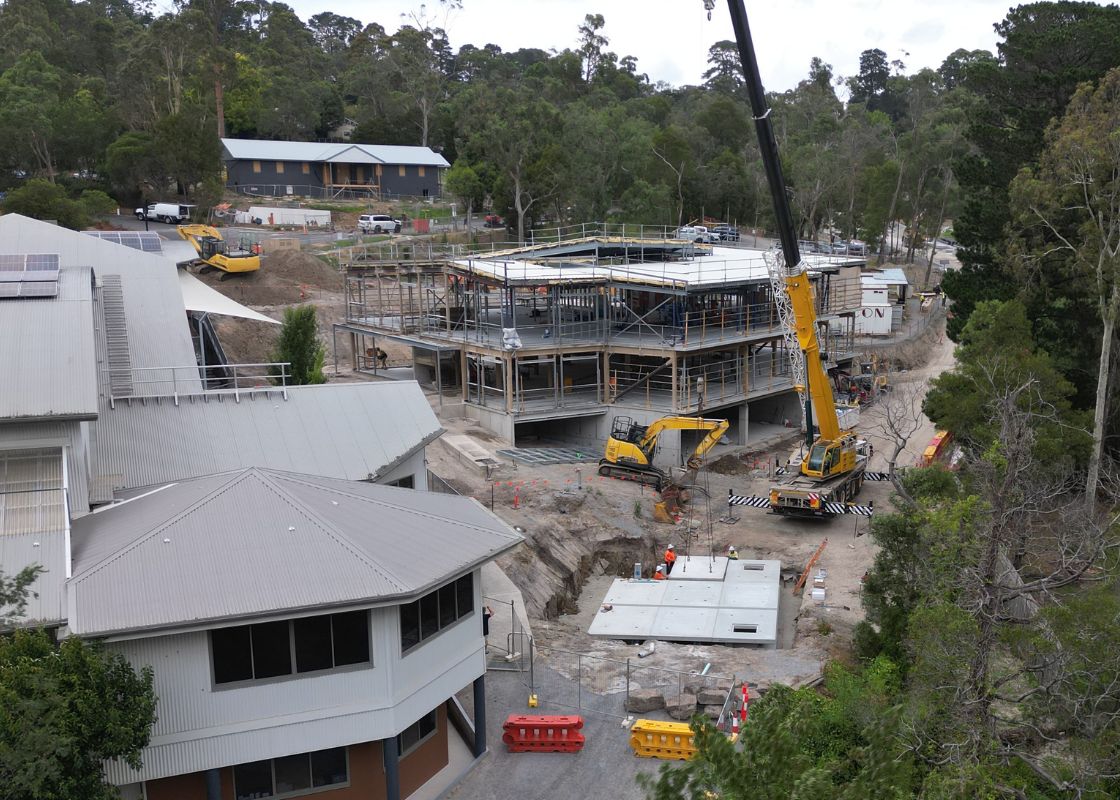
The installation of a 75,000 litre Atlan MegaVault OSD tank is the cornerstone of the school upgrade project’s detention infrastructure.
Reducing pressure on surrounding drainage, the MegaVault will temporarily store stormwater during peak rainfall events before controlled discharge into downstream networks. This detention asset will also mitigate the impacts of localised flooding during major storm events.
This modular, precast system is engineered for medium to large underground stormwater detention applications, providing flexibility throughout project design with underground installation capabilities and full trafficability.
Underground installation maximises functional space, allowing the site surface to be developed for site features such as gardens, driveways, and pedestrian areas.
MegaVault is locally manufactured and delivered ready to install. This offers distinct advantages compared to cast-in-situ systems, including faster installation timelines, reduced open excavations, decreased on-site labour requirements, and minimised project disruption.
FlowFilter & StormSack: SQIDEP-verified Stormwater Treatment
Without effective management, urban runoff from school grounds can transport litter, sediment, and gross pollutants from surrounding areas, along with residual hydrocarbons from driveways, contributing to the degradation of downstream waterways and local ecosystems.
Stormwater treatment offers an opportunity to capture these pollutants at the source, servicing the school’s catchments and preventing these contaminants from being conveyed downstream.
Atlan’s StormSack and FlowFilter were installed to meet these water quality objectives, and the performance of these devices has been verified through Stormwater Australia’s industry-leading SQIDEP framework.
Twenty-three StormSack devices were installed across the site to provide at-source primary stormwater treatment capabilities for the capture of gross pollutants, sediment and debris. Capturing pollutants close to the site surface, these systems are easily maintained through access grates.
Atlan’s StormSack has SQIDEP verified pollution removal efficiencies of 45% Total Suspended Solids (TSS), 47% Total Phosphorus (TP), 25% Total Nitrogen (TN), and 100% Gross Pollutants.
Downstream of the StormSack assets, the FlowFilter will provide tertiary filtration for finer pollutants and dissolved contaminants. An ideal option for applications requiring condensed footprint treatment assets, the FlowFilter’s internal filter cartridges are contained in a fibreglass housing.
The design of this system reduces footprint while maintaining SQIDEP verified removal efficiencies of 95% TSS (Total Suspended Solids), 93% TP (Total Phosphorus), 45% TN (Total Nitrogen), 90% Lead (Pb), 53% Zinc (Zn), and 100% Gross Pollutants.
Bridging the gap between economics and environment, the Belgrave Heights Christian School stormwater upgrade exemplifies why stormwater management is crucial on education infrastructure projects to deliver resilient spaces and manage pollution.
By combining the storage capacity of MegaVault with SQIDEP-verified stormwater treatment technologies, the project establishes a comprehensive stormwater solution aligned with modern WSUD principles and sustainable design.
Most importantly, it reflects a broader commitment to protecting the local waterways and downstream environments of Belgrave Heights – protecting Joy in Water for future generations.
AtlanTrap (formerly known as StormSack) is our latest development in at-source GPT technology. AtlanTrap maintains the existing treatment performance capabilities of the Atlan StormSack, while providing redesigned device profile, ease of installation, and incorporation of the Atlan TrapCatch bracket sytem.
Why was stormwater infrastructure installed underground?
The underground installation of the FlowFilter and MegaVault assets allows the school to maximise usable surface space for landscaping, pedestrian access, and operational infrastructure.Their modular design also enabled faster installation, reduced on-site disruption, and minimised excavation time – particularly when comparing MegaVault to cast-in-situ detention systems.
What environmental benefits does this stormwater infrastructure provide?
By reducing pollution and controlling runoff volumes, this combination of stormwater infrastructure helps protect downstream drainage infrastructure, and local waterways and habitats like Birdsland Reserve and Monbulk Creek. This supports healthier environmental outcomes and helps conserve local species such as platypus, echidnas, and wombats while contributing to the project’s broader sustainability and regulatory objectives.
What stormwater pollution is generated by schools and community infrastructure?
Stormwater runoff from school grounds and community areas can carry litter, sediment, gross pollutants, and hydrocarbons into nearby waterways. Without appropriate treatment measures, these contaminants can degrade water quality, harm aquatic ecosystems, and negatively impact the surrounding environment.
How do the StormSack and FlowFilter systems improve stormwater quality?
The StormSack devices provide at-source capture of gross pollutants, litter, sediment, and debris through easily maintainable devices with grate-access. Downstream, the FlowFilter delivers tertiary treatment for finer sediments, nutrients, and dissolved contaminants using high-performance filter cartridges. Together, these systems create a multi-stage treatment train aligned with Water Sensitive Urban Design (WSUD) principles.