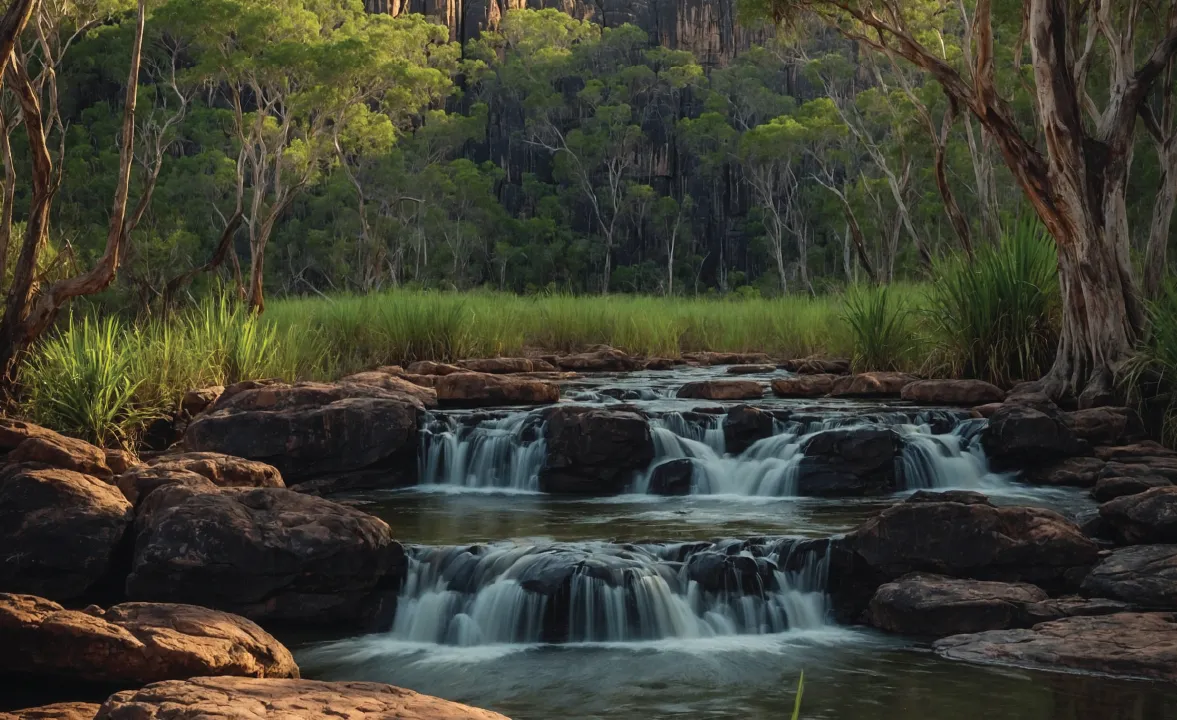
A jewel within Australia’s tropical Northern Territory, the Kakadu National Park Wetlands are one of Australia’s biodiversity hotspots. An ecologically rich and culturally significant destination, its expansive floodplains, tidal estuaries, billabongs, mangroves and monsoon forests are shaped by seasonal cycles.
With rainfall transforming Kakadu during monsoon periods, these constant phases and varied weather patterns result in diverse landscapes and extraordinary biodiversity. The scale and integrity of these wetlands ensure Kakadu wetlands importance as a national asset, and its global significance as a world-heritage listed site for its outstanding natural and cultural values.1
Kakadu wetlands are also recognised as a Wetland of International Importance (Ramsar Convention on Wetlands) and meet all relevant listing criteria, which include the uniqueness of its ecology, botany, zoology, limnology and hydrology.
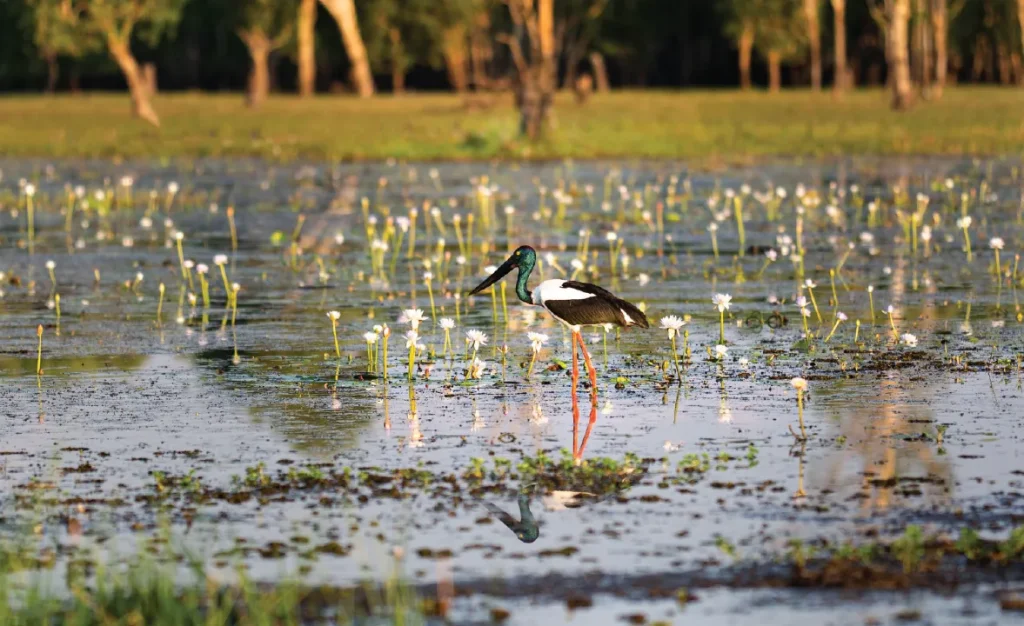
Supporting a diverse range of flora and fauna, Kakadu sees up to two million waterbirds visiting its floodplains each year2 – these include large concentrations of magpie geese and wandering whistling-duck.
The Kakadu wetlands are a complex, interconnected system of converging riparian environments. Each of these niches supports a different array of wildlife. Containing approximately 20% of the total number of fish species found in Australian freshwaters, fish species inhabiting the wetlands include the iconic Barramundi, tarpon, mullet, catfish, saratoga and mangrove jack.3
These wetland environments support threatened species and provide critical wildlife habitat for native wildlife across their lifecycles, with events such as fish spawning, bird migration, nesting and breeding. Kakadu National Park provides vital breeding areas for a wide range of species, including crocodiles, turtles, frogs, wallabies, bandicoots and sharks.
Kakadu and its wetlands are major contributors to Australia’s nature-based tourism industry, with visitors drawn to iconic locations including Yellow Water (Ngurrungurrudjba) Billabong, Mamukala Wetland, and Bubba Wetland.4 These areas provide experiences filled with dense wildlife populations, dramatic seasonal landscapes and immersive ecological tours – fostering community awareness for wetland conservation and our Indigenous cultural heritage.
Safeguarding the Kakadu wetlands is an investment in our local ecology, tourism and iconic culture. We believe clean waterways are a right, not a privilege. Together, we can protect Joy in Water for future generations – and preserve pristine riparian environments like the Kakadu wetlands.
- https://whc.unesco.org/en/list/147
- https://www.dcceew.gov.au/water/wetlands/
australian-ramsar-wetlands/kakadu-national-park - https://kakadu.gov.au/discover/nature/animals/
- https://www.gtansw.org.au/wp-content/uploads/2021/06/12_GTABulletinIssueHSCSpecial_KakaduWetlands.pdf