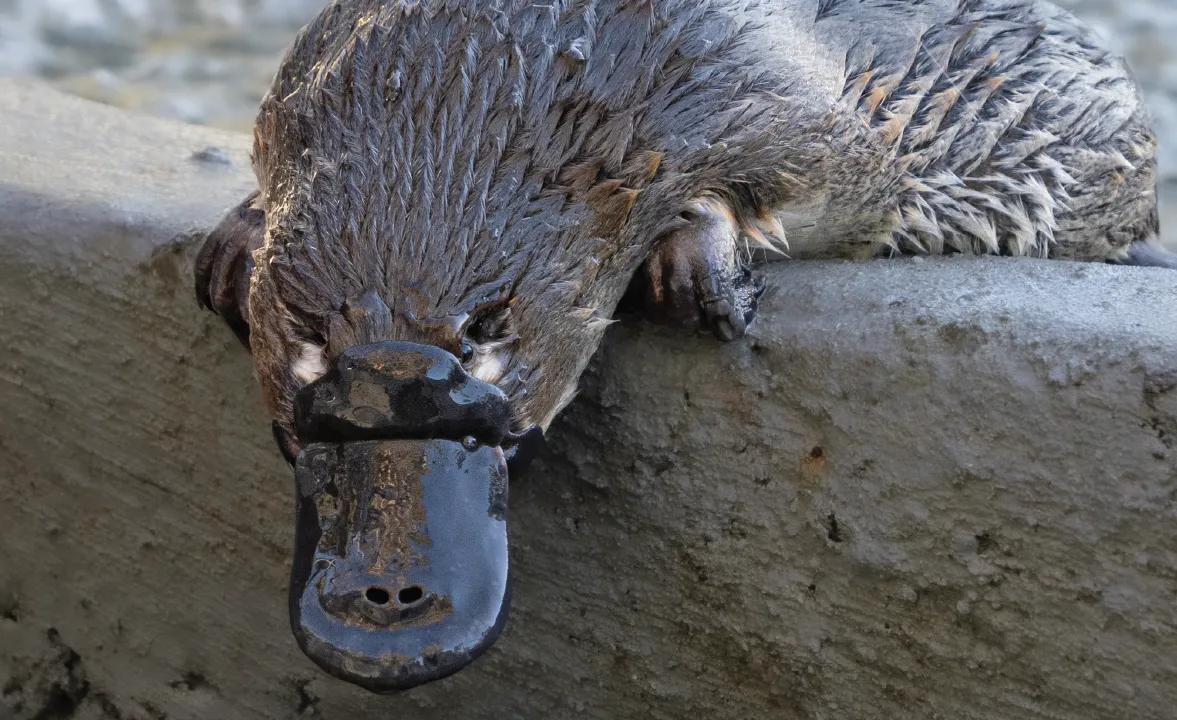
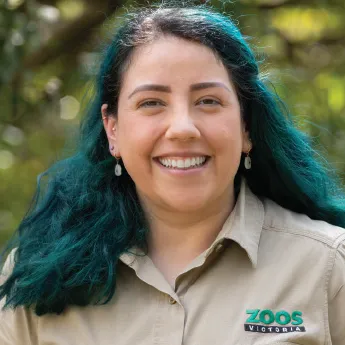
We dive into the installation of our Floating Treatment Wetlands at Healesville Sanctuary with Platypus Keeper Angelica Anguilar, whose daily work involves supporting the rehabilitation of sick and injured platypus and caring for the welfare of the park’s long-term monotreme residents.
Integrated into a series of simulated ponds and riverbanks that replicate creek environments in the Australian Platypus Conservation Centre, our FTW modules have been installed as environmental features in the centre’s tiered rehabilitation areas and freshwater shrimp tank.
Using planter baskets within the modules to mimic natural floating wetland environments, they have been populated with native species, including Woolly Waterlily, Hollow Rush, Swamp Stonecrop, and Purple Loosestrife.
The submerged root zones of these systems not only enhance water quality – they provide additional areas for platypus to explore and play, and create habitats for macroinvertebrates, which act as a natural food source for the pond’s residents.
How have the Platypuses taken to the Floating Wetlands?
The platypuses have taken really well to the Floating Wetlands. They have explored on top it and around it without making too much of a mess or destroying any of the plants.
We were a bit worried about the roots, but we actually found that our female Yami used some of those roots for nesting material.
They have all been happy with the Floating Wetlands as another space for them to explore.
What is the importance of wetland environments & habitat for Platypus species?
These wetlands are important because they are full of plants that encourage wild water bugs, dragonflies and other invertebrates to be around the habitat. We have seen plenty of dragonflies and they are breeding which means they will have their larvae in the water and that’s what the platypus will eat.
How does the ability of systems like Floating Wetlands to mimic natural environments facilitate the wellbeing of your wildlife?
This system encourages macro invertebrates because of the plant life and that is a much more natural diet for the platypus.
Have you found any key benefits to this approach to incorporating wetlands vegetation in this habitat?
For dietary reasons, the wetlands have been helpful. It has been encouraging those natural invertebrates. It’s good for the water as well. It’s great to have those extra plants to maintain our water quality.
The Floating Wetlands helps to keep the soil in one spot, so that makes things easier for cleaning too.
How can the Floating Wetlands be reconfigured to meet changing pond requirements?
We have different ponds that are different sizes and the Floating Wetlands are quite adaptable. We can change the shape for the platypus to explore and give them more variety. The flexibility is great. We can also rotate the Floating Wetlands into a space without the platypus to give them time to rest and recover and rotate in new plant species depending on the season.
Are the systems easy to maintain for the Sanctuary team?
I feel like we haven’t needed to do anything with them. The one thing we did was cut the roots slightly so the platypuses wouldn’t become tangled. Although we’ve found the platypuses like to rip up the roots and have fun with them.
How does stormwater and urban pollution impact Platypus in the wild?
What we find when we get a platypus in from the wild, is they are entangled in loopy litter like elastic bands, plastic rings and scrunchies. They often have severe injuries and can’t swim well.
Rubbish is often pushed into the drainwater and that is a huge risk to the survival of this species. If you see loopy litter on the ground the best way to help is to seize it, snip it, bin it.