Set in the foothills of the Yarra Ranges, Healesville Sanctuary is one of Australia’s leading places for native wildlife conservation, recognised for its commitment to fostering community stewardship for our native species with its tranquil tracks, learning activities, and hands-off animal experiences.
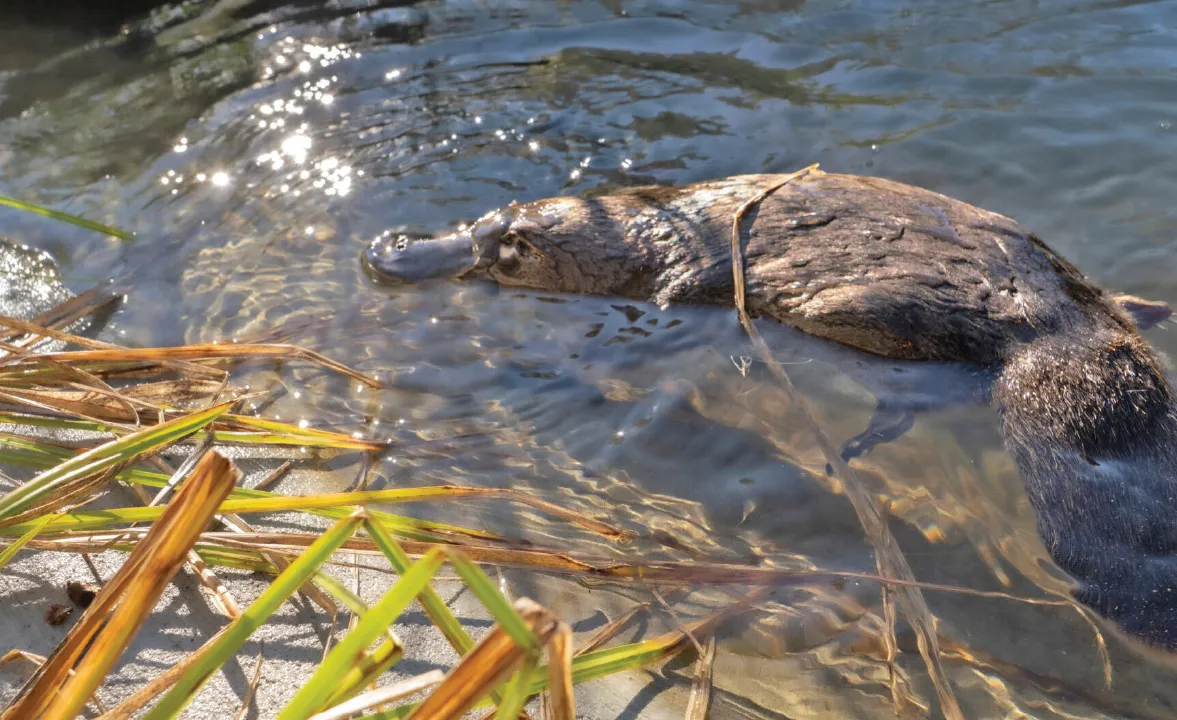
The Sanctuary is one of only a few locations in the world to successfully breed captive Platypus species. In 2025, stage one of the Australian Platypus Conservation Centre opened at the Sanctuary. These innovative, modern facilities feature a series of tiered ponds with burrowing banks, creek structures, and crystal-clear water.
Supporting the recovery of injured and ill Platypus, the rehabilitation area consists of climate-controlled environments and dedicated research hub fitted with monitoring equipment to support healthier outcomes for the Sanctuary’s temporary and permanent residents. This includes Millsom, a platypus that has been in Healesville’s care for over twenty years.
Threats to wild Platypus include loss of habitat, predation by dogs, and a wide range of human-related environmental issues, such as entanglement in plastics, elastic bands, and urban litter. Injuries stemming from stormwater pollution include restriction of their ability to swim and forage, which in some cases can even be fatal.
We believe clean waterways are a right, not a privilege. Stopping the conveyance of stormwater pollution in our urban catchments reduces its conveyance to downstream waterways, lakes, and seas – protecting our native wildlife and fostering community values to provide clean coastlines and rivers.
Native Wetlands Plants: Biomimicry of Natural Ecosystems
Healesville Sanctuary’s Platypus Rehabilitation areas are designed to closely replicate the variable environments of natural rivers and creeks with flowing water and embankments that mirror their real-life counterparts. These ensure platypuses regain physical fitness during recovery and stay acclimated to their natural habitat.
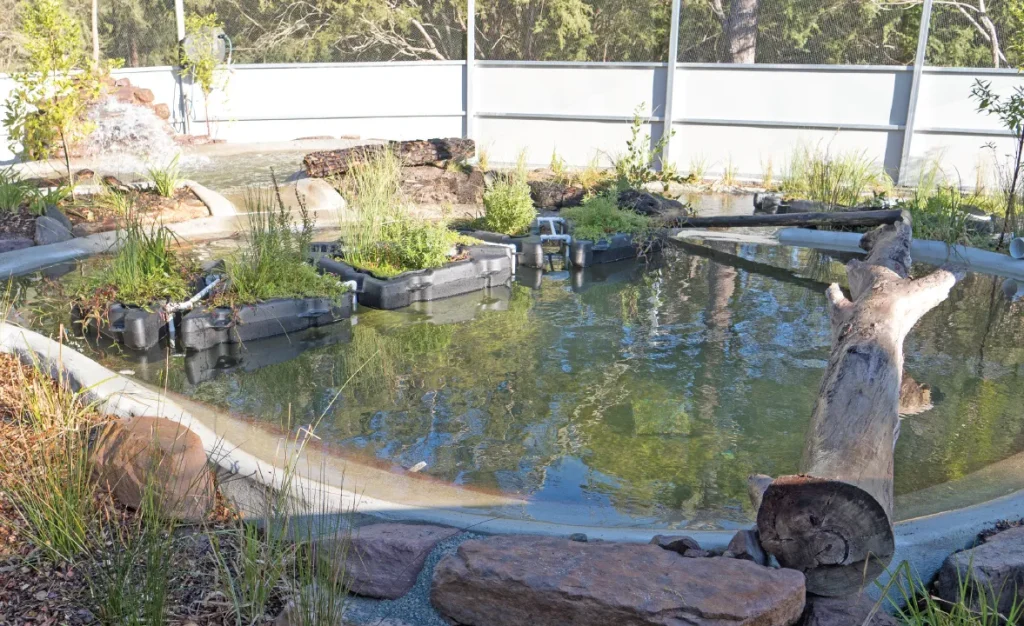
An Atlan Stormwater Floating Treatment Wetlands has been installed as an environmental feature of these areas – a modular network of platforms that mimic natural wetland ecology. Sitting on the water’s surface, these floating islands contain plant baskets to allow the establishment of wetland vegetation.
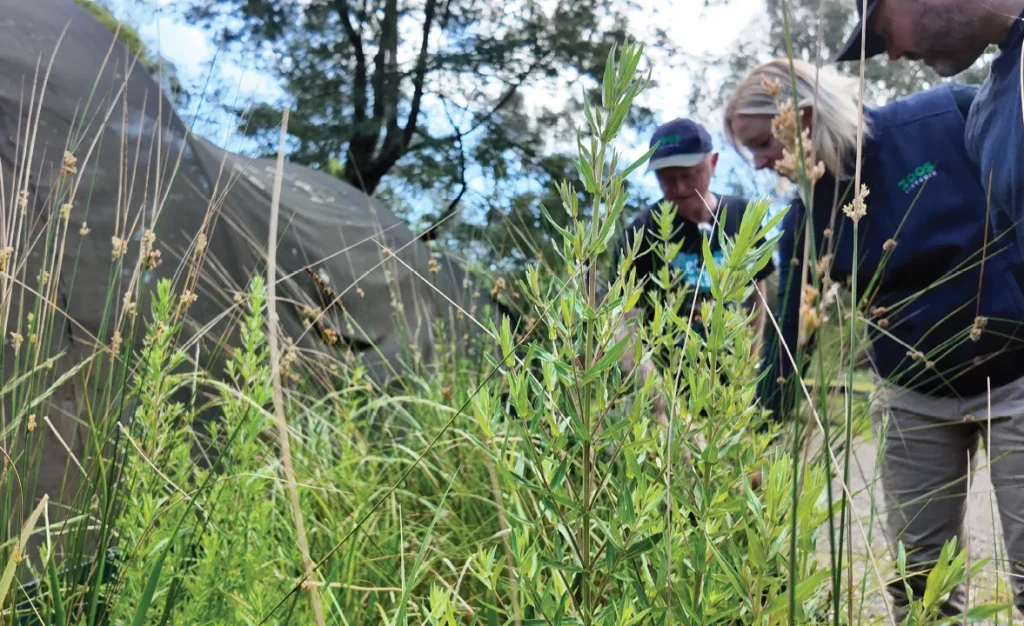
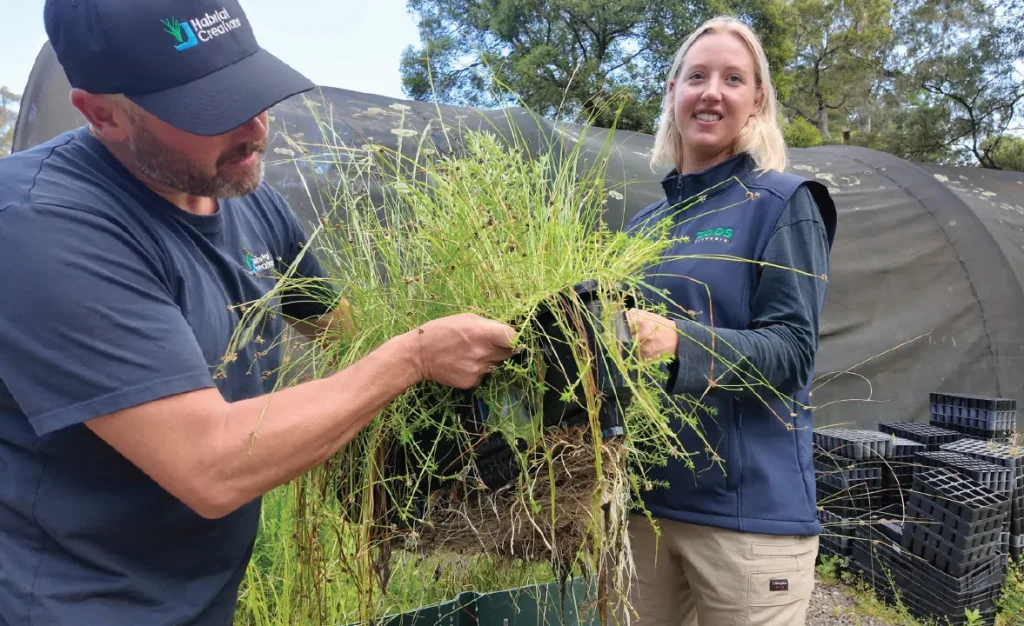
A nature-based asset that provides functional aesthetics, the FTWs have been planted with a native selection that includes Woolly Waterlily, Hollow Rush, Swamp Stonecrop, and Purple Loosestrife. A mix of perennial rushes, sedges, and groundcover species was used to create unique structures, enhancing biodiversity, attracting insects, and improving aesthetics.
As the roots of these plants submerge into the water column, they serve dual purposes – improving water quality in the rehabilitation ponds and providing the benefits of the habitat they create. This allows the platypus to engage with the Floating Wetlands and the roots beneath, playing, foraging, and gathering nesting material.
The diet of platypuses includes a bevy of aquatic macroinvertebrates, such as insect larvae, freshwater crustaceans, and worms. Healthy wetlands provide an active ecosystem that creates microhabitats for these food sources – such as insects, dragonflies, and their hatchlings.
Easy to maintain, the Floating Wetlands units can be reconfigured, relocated and replanted. This allows them to be rotated through different environments and areas of the centre, and wetland plants to be replanted to suit seasonality and the ongoing needs of the monotremes.
Preserving Joy in Water with Nature-Based Solutions
Integrating our Floating Treatment Wetlands in the Australian Platypus Conservation Centre demonstrates the ways stormwater treatment technologies can be implemented beyond traditional infrastructure – beautifying space, creating habitat, and providing platforms for the growth of local flora.
These technologies utilise principles of biomimicry to recreate natural wetland ecosystems, improving water quality with natural biochemical processes. As our cities grow and urbanisation increases, being able to adapt nature-based engineering to provide sustainable outcomes is imperative for the health of our local flora and fauna.
The installation at Healesville Sanctuary displays how Floating Treatment Wetlands can support native wildlife and improve ecological outcomes.
Together, we can protect Joy in Water for future generations, for our family, friends, and Australia’s native species.