Selecting Floating Wetlands Plants for Local Ecosystems

Despite only covering approximately 6 per cent of the Earth’s surface, 40 per cent of all plant and animal species live or breed in wetlands. Wetlands ecosystems are riparian biodiversity hotspots that provide flood mitigation, water filtration and habitat for flora and fauna.

Biomimetics is the application of biological designs to solve engineering problems by utilising nature-based systems and sustainable alternatives. A guiding principle of Floating Treatment Wetlands, these systems mirror the ecological functions of natural floating islands and wetland ecosystems.

Urbanisation is directly linked with declining wetland areas. Floating Treatment Wetlands allow these environments to be retrofitted in our growing cities, helping to reintroduce wetlands in our urban environment and expanding the solutions available to engineers, developers, and councils.

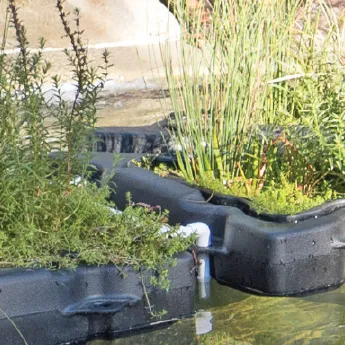
The design of FTWs incorporates planter baskets and growing media, which allows vegetation to flourish.

The roots of these systems are submerged in the water column, extending and forming dense networks of microbial communities that help break down stormwater pollution.

A key advantage of these modular systems is their flexibility, allowing tailored planting schemes with local plant varieties. Planting facilitates design opportunities with community and professional consultation. Consequently, plants can be selected for a wide variety of reasons, including stormwater treatment capability, community aesthetics, biodiversity and the development of native habitat.

Native Plants & Biodiversity

The use of native plants takes Floating Treatment Wetlands beyond stormwater treatment applications, offering enhanced ecological benefits and increased biodiversity. Not only are native plants naturally adapted to factors like climate, seasonal changes, and flood patterns, but they also provide habitat for local birds, bees, insects, frogs, turtles, invertebrates, shrimp, fish and other various wetland life.

Plants are also selected for physical properties such as root structure, root density, resilience, and the ability to withstand pressures from local weather patterns and foraging animals.

Habitat Creations was formed in 2007 as an indigenous Australian plant nursery based in Melbourne and Gippsland. Today, they have several nurseries, expanded planting teams, and have developed specialised services in the environmental landscaping, conservation and land management field. Plant selections from Habitat Creations have been used in Atlan’s Floating Treatment Wetlands from Victoria to Tasmania.

“Underneath the FTW, habitat and food source are created in the root structure of the plants for a wide range of aquatic invertebrates, which include insect larvae and nymphs. Once invertebrates have moved in, frogs, shrimp, birds, and other vertebrates also start to call the FTW home, as there is a continuous food source and shelter.”

Planting FTWs is a nature-inspired process driven by care for our waterways and the local flora and fauna that populate them. A defining strength of these systems is their ability to integrate with our urban environments, providing opportunities for reintroducing habitat and native species. This supports the preservation of our wetland ecosystems for future generations.

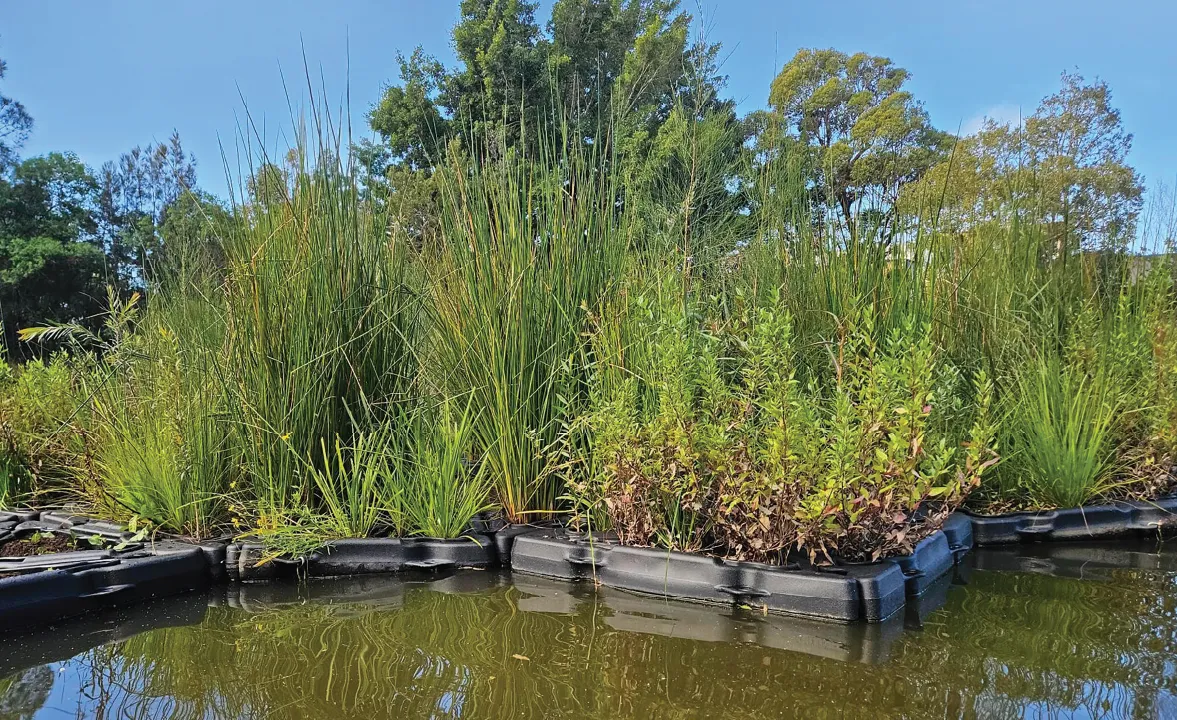
“Floating Treatment Wetlands achieve significant biodiversity improvements, creating habitat and an important food source for the lifecycle of many invertebrates.”
Steve Haughton
Managing Director, Habitat Creations

Plant Selections: Growing Wetland Environments

We dive into some of our feature plant selections from across our Floating Treatment Wetland installations in Australia and the USA!

Healesville Sanctuary (Victoria, Australia)

  • Common Spike-rush
  • Spotted Knotweed
  • Tall Sedge
  • Swamp Club-rush
  • Woolly Waterlily
  • Hollow Rush
  • Swamp Stonecrop
  • Purple Loosestrife

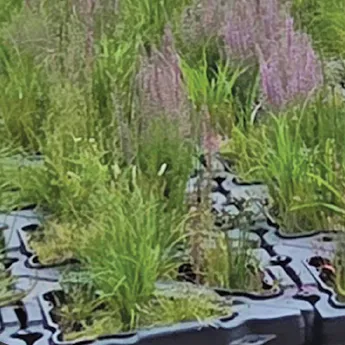
Sorrell (Tasmania, Australia)

  • Flat-leaf Sedge
  • Knobby Club-rush
  • Green Rush
  • Pale Rush
  • Upright Water-milfoil
  • Slender Knotweed
  • Purple Loosestrife
  • Blady Grass

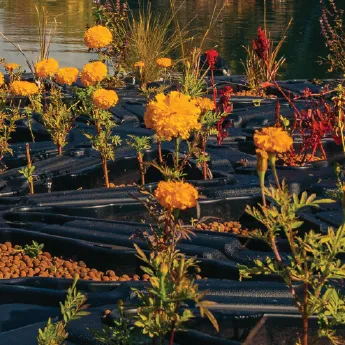
Village of Pinecrest (Miami, USA)

  • Bulrush
  • Blue Iris
  • Golden Rod
  • Celosia
  • African Marigold
  • Lisanthus

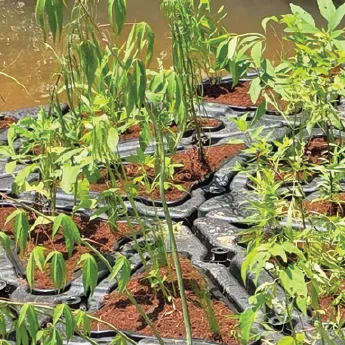
Cooper Creek (Georgia, USA)

  • Lizard’s Tail
  • Meadowbeauty
  • Muck Sunflower
  • Joe-pye-weed
  • Ironweed
  • Cardinal Flower
  • Great Blue Lobelia
  • Smooth Beggars Tick

Enjoy this article?

Read and share more articles from Joy in Water Issue #15.

Scroll to Top