
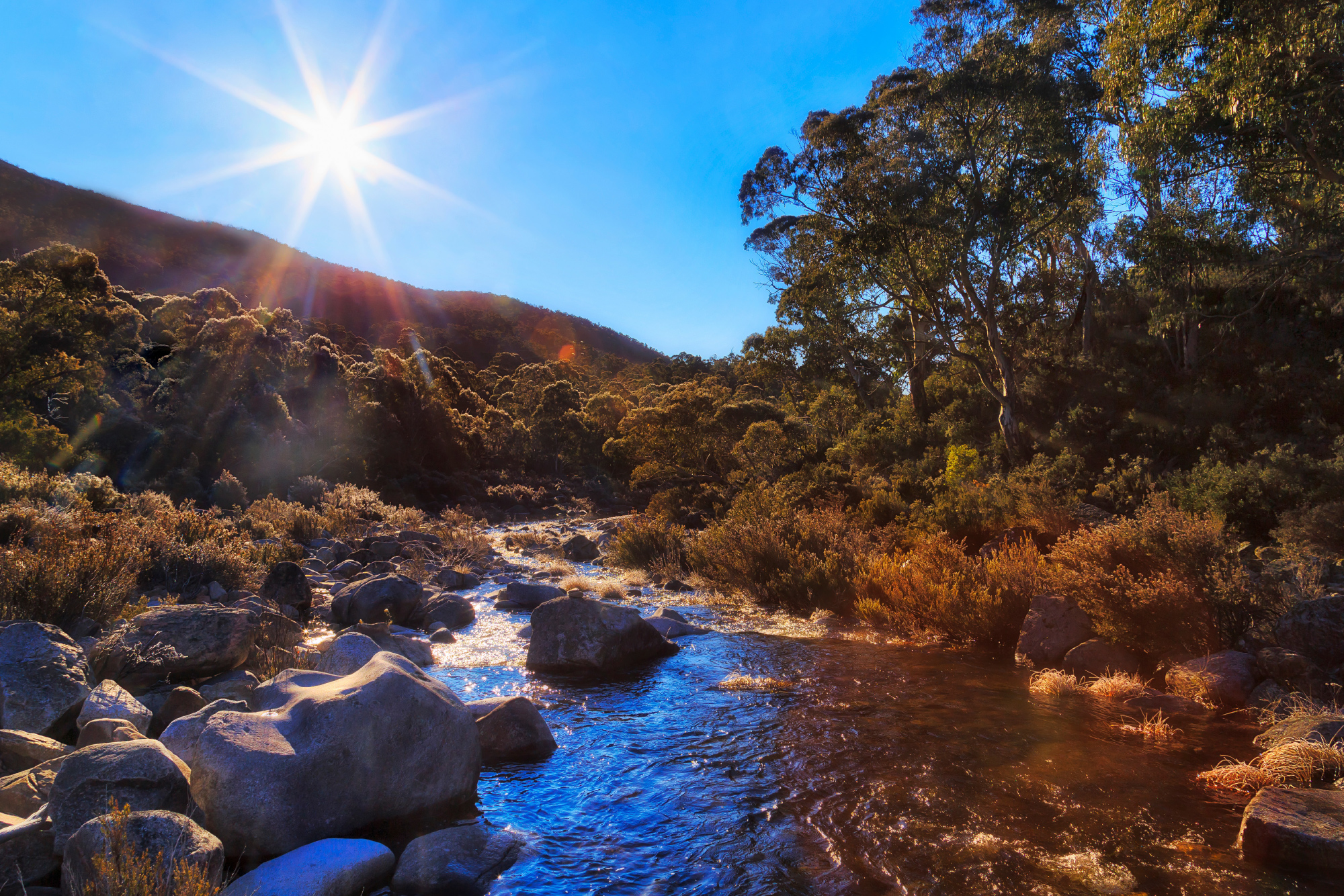
Flowing from the eastern slopes of the Snowy Mountains, the Snowy River is one of Australia’s most beloved waterways and its largest snowmelt river – iconically brought to life in Banjo Paterson’s The Man from Snowy River and retaining its symbol of wilderness and natural beauty to this day.
The Snowy River’s headwaters originate in the alpine landscapes of Australia’s tallest peak, Mount Kosciuszko. Carving through the rugged valleys of the Australian Alps with its quintessential Eucalypt Forests, it flows into Lake Jindabyne then south into Victoria’s Snowy River National Park before meeting the sea at the river mouth in Marlo, Victoria.
The Snowy River catchment covers an area of 15,869 square kilometres, equally divided between New South Wales and Victoria. Key tributaries of the Snowy River include Thredbo, Mowamba, MacLaughlin, Delegate, Deddick, Suggan Buggan, Buchan and Brodribb Rivers.
Built in 1949 to 1979, and diverting the Snowy River to hydroelectric production and irrigation, the Snowy Hydro Scheme consists of eight power stations and 16 major dams – Australia’s largest infrastructure project ever at the time. Impacting downstream environments by diverting natural flows, the Snowy Water Inquiry in 1998 saw mandated increases to water releases into the Snowy River to rehabilitate the environmental corridor.
The Snowy River provides key habitat for many native species, these include fish species such as Australian smelt, river blackfish, and Murray cod.
Wildlife calling the banks and surrounding environments of the Snowy River home include kangaroos, wombats, wedge-tailed eagles, echidnas and threatened species like the platypus, koala, and spotted-tail quoll.
Downstream, the river’s estuary and wetlands environments include Lake Corringle, Lake Wat Wat, Lake Curlip and Cabbage Tree Lagoon, which offer feeding and breeding areas for wetland and migratory bird species.
The protection of the Snowy River, through its mountain environments to its estuaries and wetlands, starts by capturing pollution in our urban catchments. We work in our communities to build infrastructure for the responsible management of stormwater and to inspire a culture of stewardship to protect and sustain our riverine environments.
Our mission is to ensure Joy in Water for future generations, and protecting culturally significant waterways like the Snowy River is an important step to preserving these environments for our family and friends.
Referemces
1 https://theaustralianalpsnationalparks.org/wp-content/uploads/2016/02/rehabilitation-of-former-snowy-scheme-sites-in-knp.pdf
2 https://www.environment.nsw.gov.au/topics/water/water-for-the-environment/catchments/snowy-and-montane
3 https://storymaps.arcgis.com/stories/5b1a0aebe3c9431698930ea5894fdc29
4 https://www.vewh.vic.gov.au/healthy-waterways/gippsland-region/snowy-river
