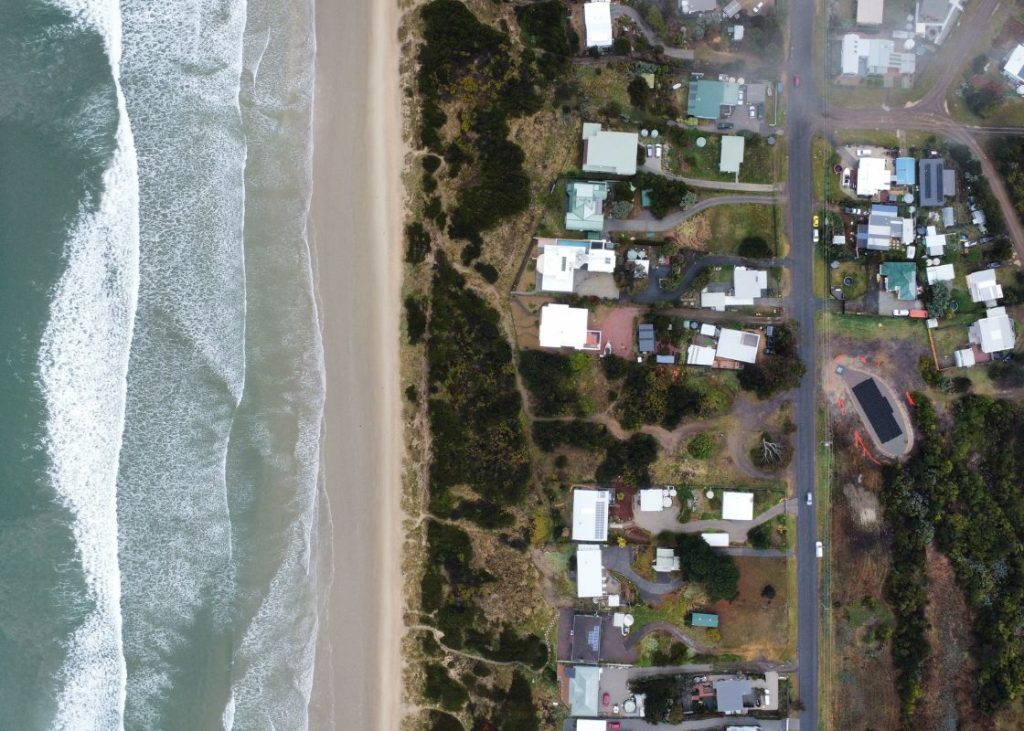
Established in 1821, Sorell is one of Tasmania’s oldest towns and fastest growing communities. Located 25 kilometres from Hobart, the surrounds of Sorell Municipality are known for their coastal communities and pristine white sands of the Southern Beaches.
This 23-kilometre stretch of coastline from Lewisham to Dunalley contains some of Tasmania’s most acclaimed small beaches – with the local community and its visitors using the scenic waterfront for a range of activities including swimming, walking, surfing and kayaking.
The focus of the $50 million Coastal and Estuarine Risk Mitigation Program (CERMP), funded by the Australian Government’s National Emergency Management Agency, was to support projects that reduce the impact of disasters on coastal communities. This project aims to safeguard dune and marine environments along the Southern Beaches from the impacts of stormwater pollution and erosion.
The goals of this initiative are to reduce stormwater pollutants entering these local environments, improve management strategies through the upgrade of twenty-two outfalls in the area, and develop strategic Water Sensitive Urban Design (WSUD) assets to facilitate environmental resilience and sustainability.
Reflecting our mission as Zero Pollution Ambassadors to capture stormwater pollution, our provision of high-performance stormwater assets to this important community program is essential to protecting Joy in Water experiences for future generations.
Design Solutions for Stormwater Challenges in Coastal Tasmania
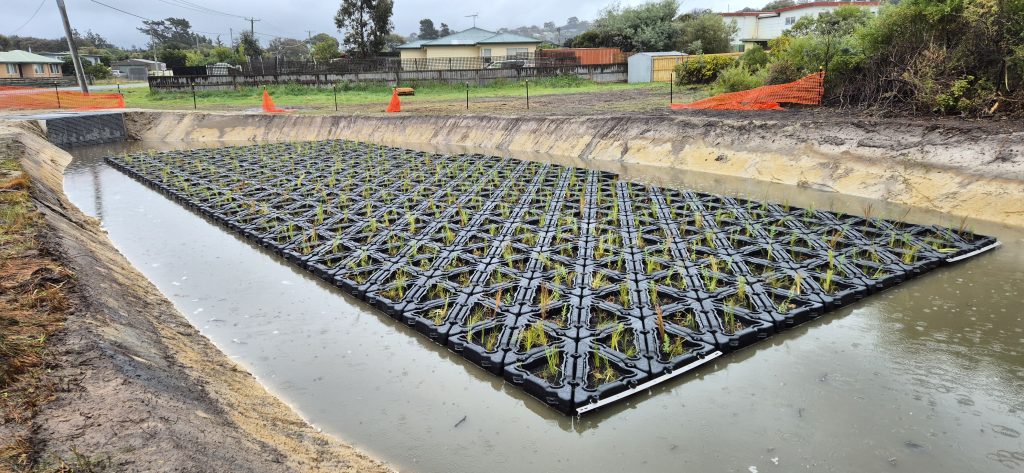
Carlton Beach is one of the focus areas for the CERMP and the site for the deployment of an Atlan Stormwater Floating Treatment Wetlands (FTW).
Developed in collaboration with Sorell council and Flussig Engineers, this green stormwater asset aims to reduce pollutants conveyed by stormwater runoff to nearby coastal environments from surrounding hillsides and road networks.
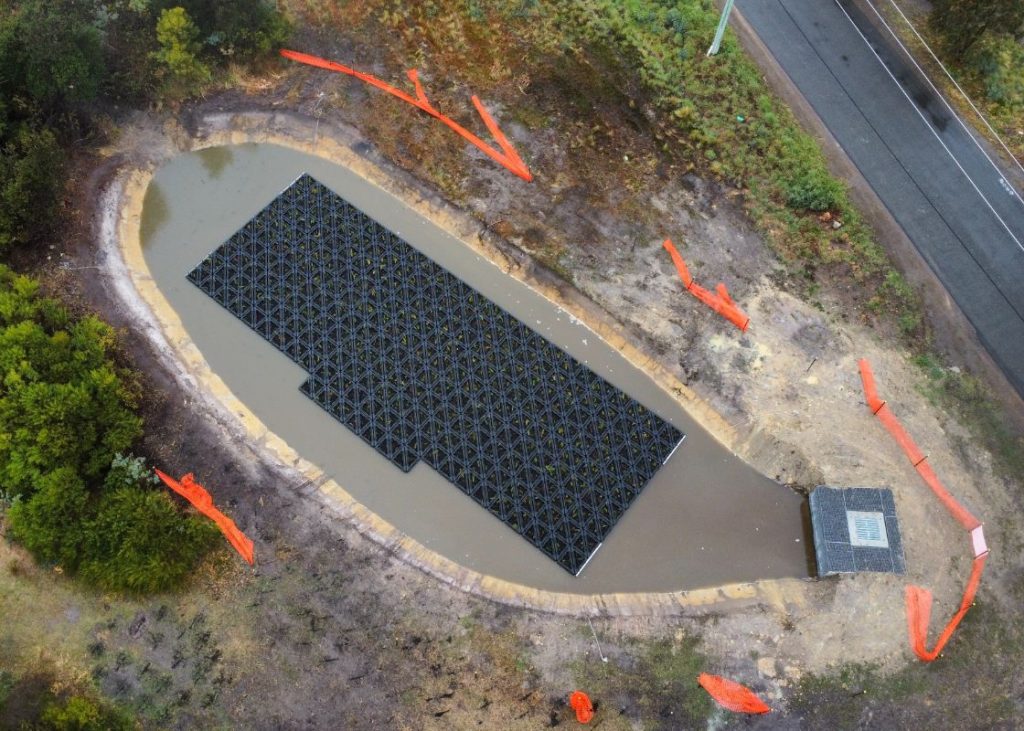
In an 8.1 by 24.3 metre configuration, the 486-module Floating Treatment Wetlands installation covers approximately 200 square metres.
Recently built, a sediment basin situated a block behind Carlton Beach was ideally suited for deploying the FTW system. By deploying floating modules on top of the basin’s water body, environmental benefits will be maximised, while reducing site disruption, land use, construction footprint, and cost – particularly compared to conventional constructed wetland alternatives.
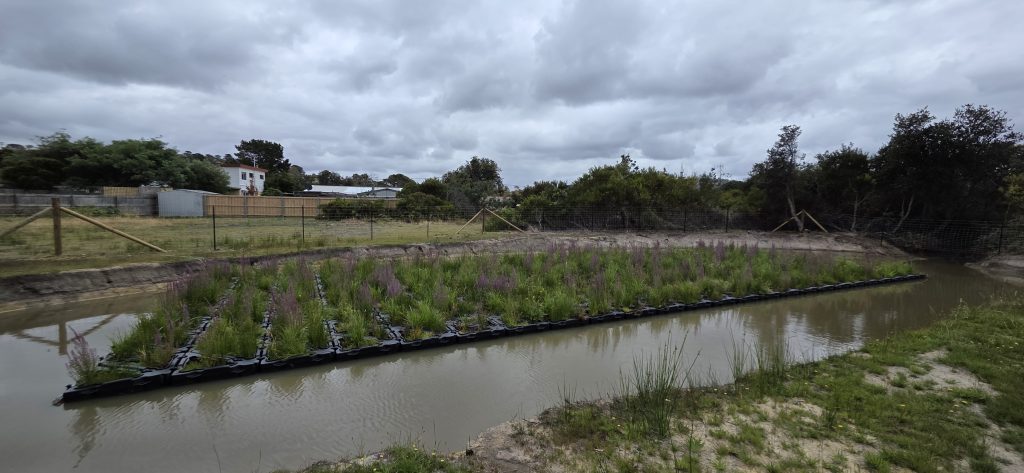
Locally designed, manufactured and supplied by Atlan Stormwater, our Floating Treatment Wetlands are vegetated assets that allow wetland plants to grow on the water’s surface. As these plants grow, their roots suspend in the water column, treating incoming stormwater flows for target pollutants including phosphorus, nitrogen and total suspended solids.
Modular Floating Wetlands: Water Quality & Environmental Outcomes
Key program outcomes for the FTW asset include improving water quality, reducing nutrient loading, and protecting local outfalls from issues such as algal blooms. These support the CERMP’s larger goals with an innovative green asset that enhances site aesthetics and creates habitat for local flora and fauna.
Installation and commissioning were completed in just two days. The speed of this assembly and planting demonstrates the benefits of modular FTW designs, which are lightweight, durable and easy to manoeuvre on-site.
This innovative stormwater solution balances sustainable principles, best practice stormwater management, and high-performance pollution removal. Crucially, the Floating Treatment Wetlands also provides a sense of community engagement – a prominent green asset that gives the local community direct insight into stormwater treatment outcomes.
Atlan Stormwater supports the CERMP initiatives, and the Carlton Beach wetlands project showcases our belief that clean waterways are a right, not a privilege. Working together with project stakeholders, we will protect Joy in Water for future generations and help secure better outcomes for the area’s waterways, estuaries and beaches.
Learn more