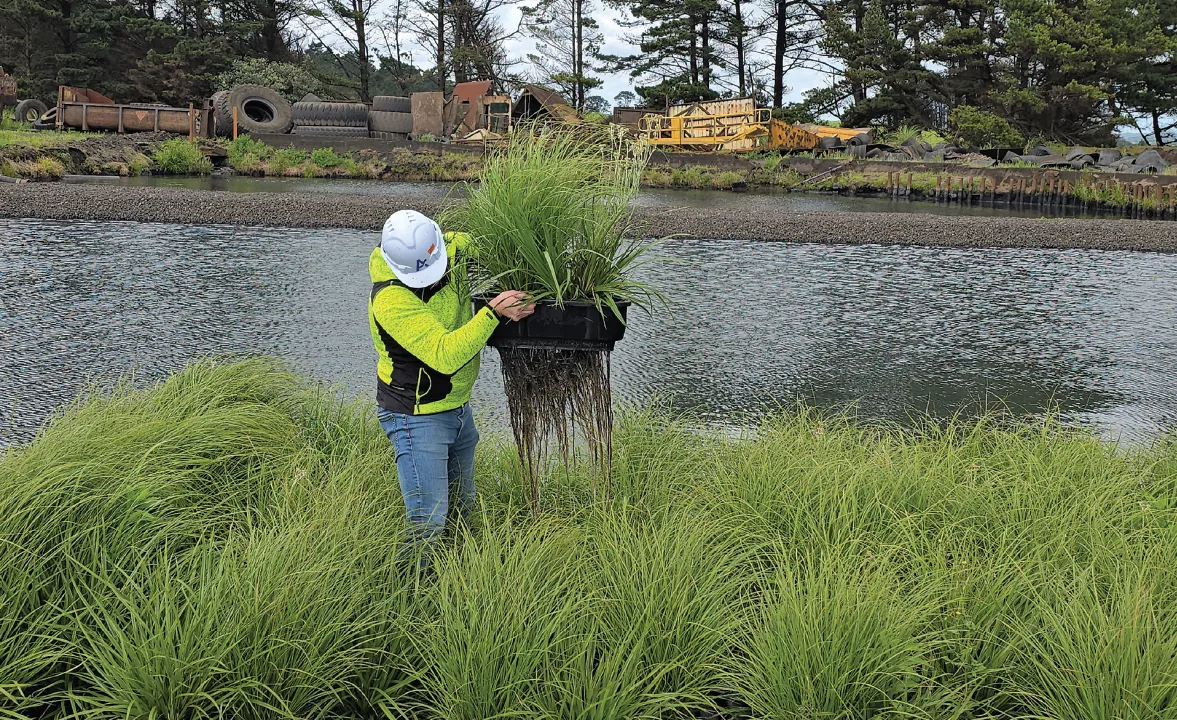
Combining natural biological processes with performance engineered stormwater design, Floating Treatment Wetlands (FTWs) supercharge pollution removal with wetland vegetation and their submerged root systems.
To create these environments, Atlan’s modular floating structures are placed to replicate natural floating islands. Each module contains planting baskets and growth media, allowing wetland species to be located in a stable position in the water column on rivers, lakes, estuaries, sediment basins and stormwater ponds.
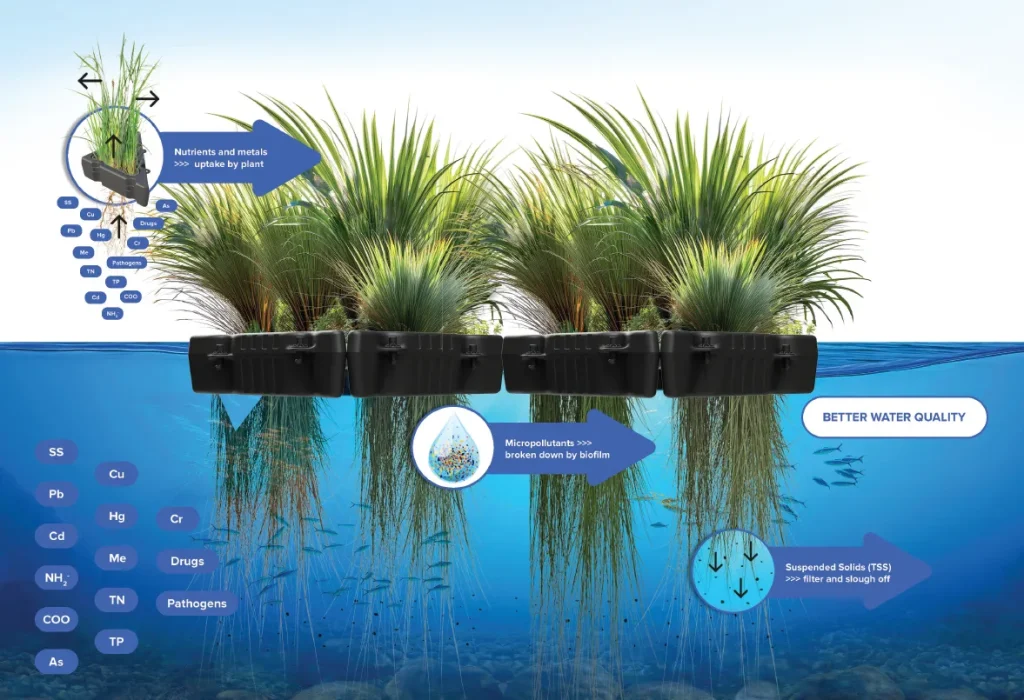
The dense root masses of FTWs use three main removal pathways to treat nutrients – nutrients settling out in sediment, nutrient uptake by plants, and microbiological processes. Floating Wetlands enhance each of these three removal pathways.
Wetland plants live in what is known as the macrophyte zone, where aquatic plants grow in water environments with their stems, leaves, and flowers extending above the water’s surface.
Integrating water treatment with green infrastructure, wetland plants in these systems are primarily selected for physical characteristics such as environmental resilience, root density, and root structure. They may also be picked for aesthetics and local biodiversity objectives.
As these root systems grow in a submerged environment, they support the creation of microbial biofilms which facilitate stormwater treatment.
Suspended particles in the water accumulate in the root network beneath the FTW, and as water flows past, sediment and bound pollutants settle or attach to the biofilm and root surfaces.
The floating nature of the wetland structure also encourages strong plant growth by providing optimal growing conditions.
Biofilm: Nature-based Stormwater Treatment
Biofilm supercharges the treatment of incoming stormwater flows. When sediment in the water passes through the root mass, it is captured by the biofilm and accumulates.
As it gets heavier, the sediment falls off and settles to the bottom of the water body.
In traditional wetlands, plants take root in the soil on the foreshore. By floating on the water’s surface, Floating Wetlands provide larger surface area for biofilm growth – this matrix of biofilm and plant roots increases sedimentation and water treatment capability. This reduces land take by up to 60% compared to conventional alternatives.
Due to the high volumes of submerged root mass, Floating Wetlands provide greater removal of TSS (Total Suspended Solids) than a constructed wetland relying on gravity and attenuation times alone.
The microorganisms in the biofilm are responsible for a range of biochemical processes, helping to drive nitrification and phosphorylation of nutrients. Resulting nitrogen is either absorbed by the plants or released into the atmosphere.
Removing nutrients is a key benefit of Floating Wetlands assets, which can prevent algae blooms and the growth of invasive species that flourish in high nutrient conditions.
FTWs are often installed in combination with primary treatment assets (Gross Pollutant Traps) to minimise the amount of litter, debris, and sediment entering the waterbody from nearby catchments. This reduces the impacts of high pollutant loads on wetland environments, reduces impacts on plant growth, and lowers maintenance requirements.
A key function of Floating Treatment Wetlands is their ability for retrofit on existing sediment basins and stormwater ponds. Stormwater ponds and basins were historically designed for flood control, not water quality. FTWs provide a low-impact approach to improving water quality, providing habitat, and creating flourishing wetland environments – protecting Joy in Water for future generations.