
AtlanFilter®

TERTIARY STORMWATER FILTRATION CARTRIDGES

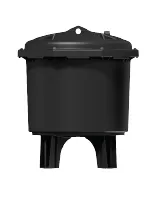
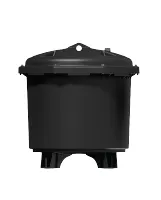
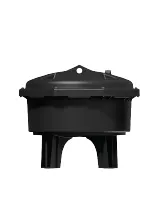
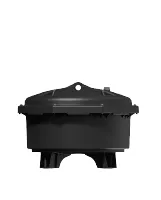
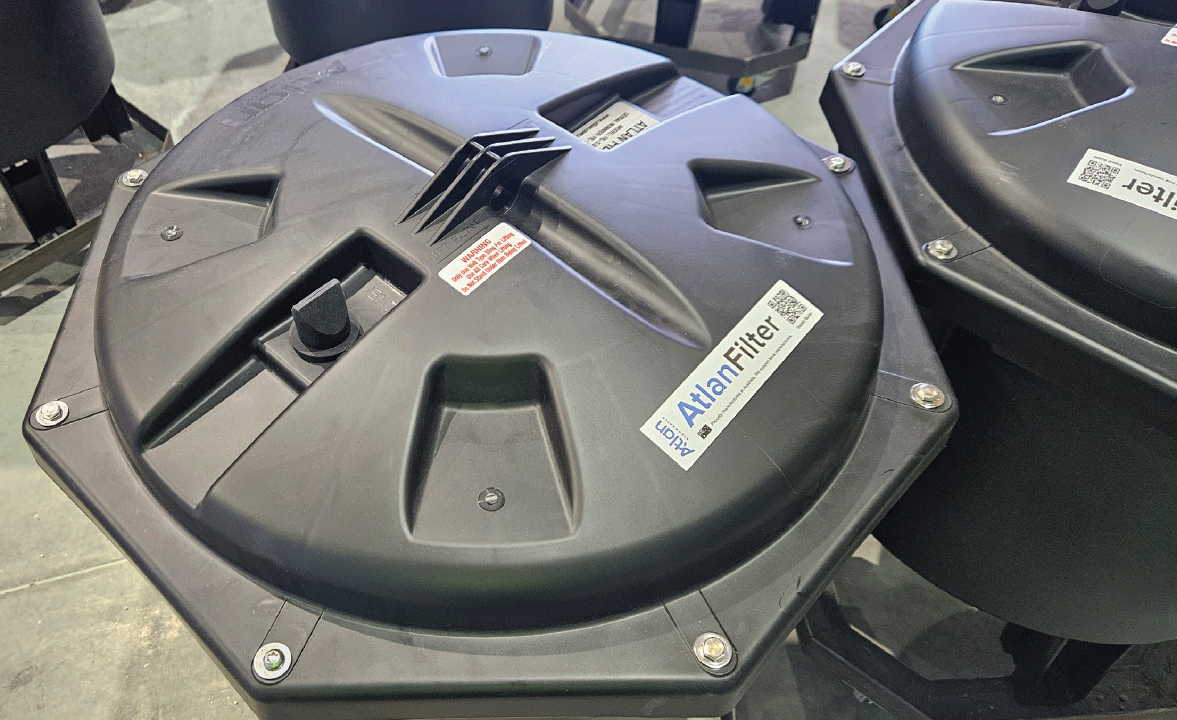
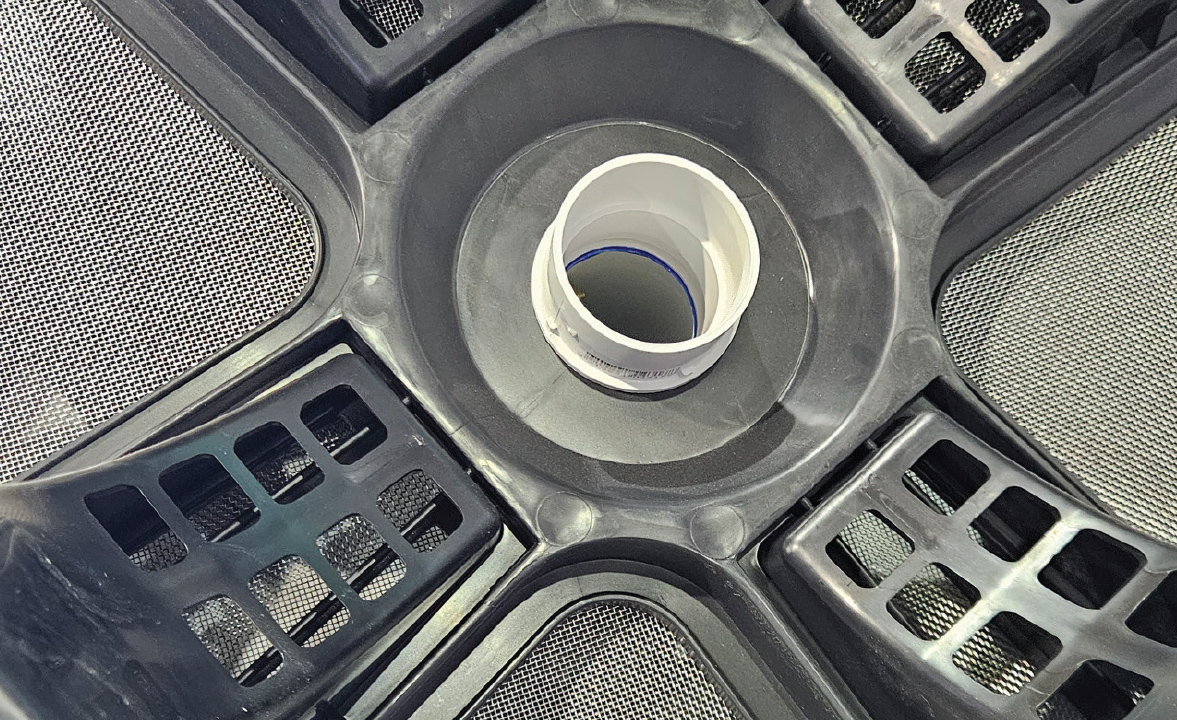
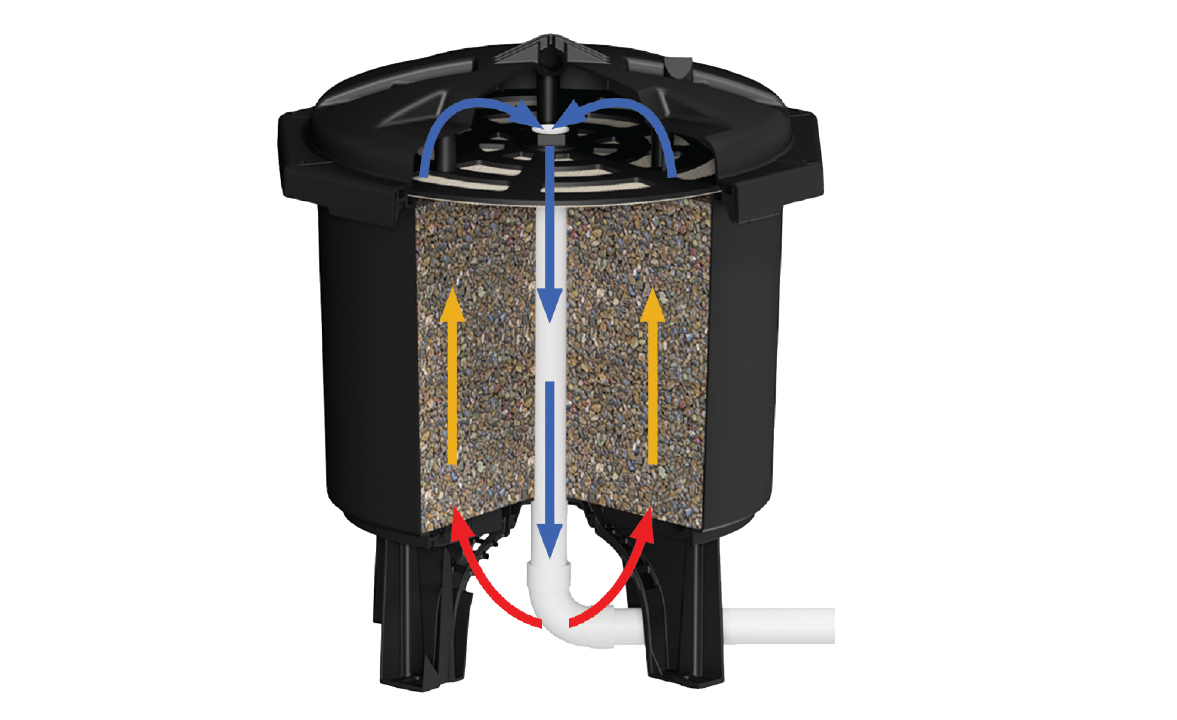
Our cartridge filter system, AtlanFilter, is a tertiary stormwater filtration system that incorporates an upflow treatment process which maximises surface treatment area. Flow through the filter cartridges utilises a self-regulating siphon which results in a low maintenance and high performance treatment of stormwater runoff. The automatic backwash at the end of each storm event further lengthens the lifespan of the stormwater treatment filter.

Hydraulic pressure forces water through the filter media — causing a constant velocity throughout the filter area realising a consistent media contact time and therefore treatment. Upon completion of a stormwater treatment cycle, the filter backwashes and effectively dislodges particulates from the filtration layers.

High-Efficiency Inorganic Media

AtlanFilter’s inorganic filter media ensures it doesn’t leach nitrogen and other nutrients. Providing high removal efficiencies, the cartridge system is designed for high flow capacity and greater surface area.

Advanced Filtration Technology

Utilises up-flow filtration to effectively capture pollutants such as sediment, hydrocarbons, heavy metals, phosphorus, nitrogen, and total suspended solids (TSS).

Flexible Flow Rate Capability

Offers 3 LPS for full height and 1.5 LPS for half height filters, with SQIDEP-verified performance.

Easy Installation and Maintenance

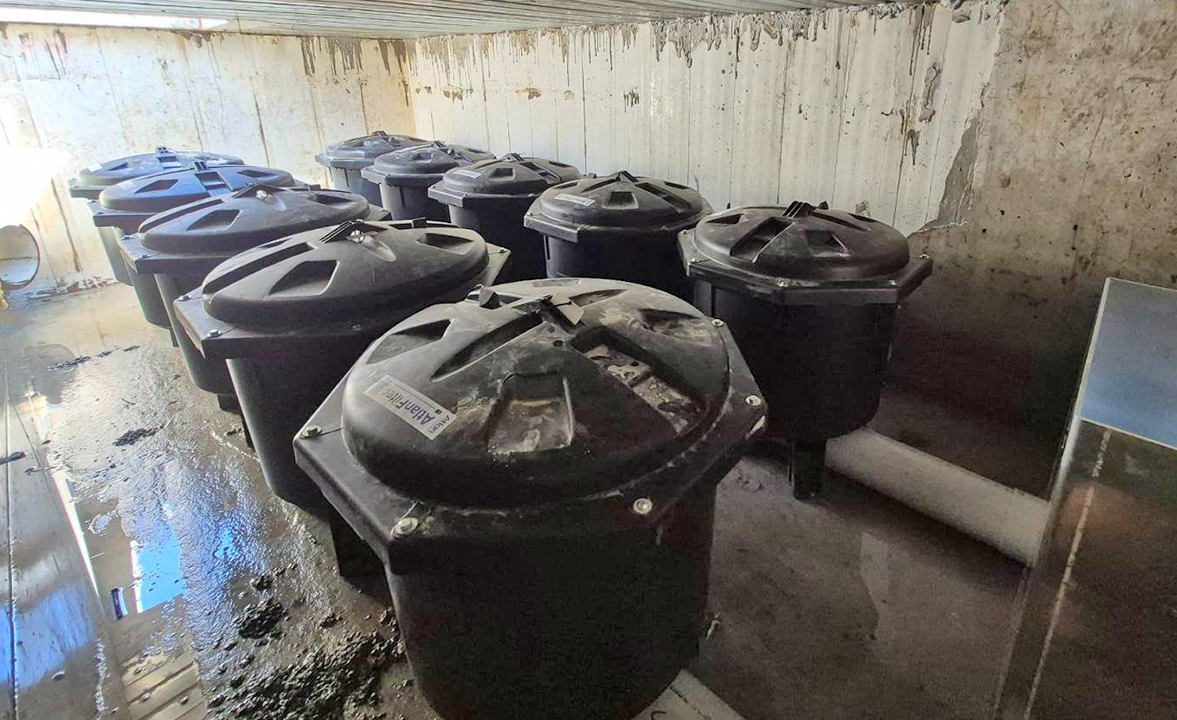
Lightweight, no-crane installation with straightforward maintenance and easy cartridge access for pollutant removal.

Compact Design

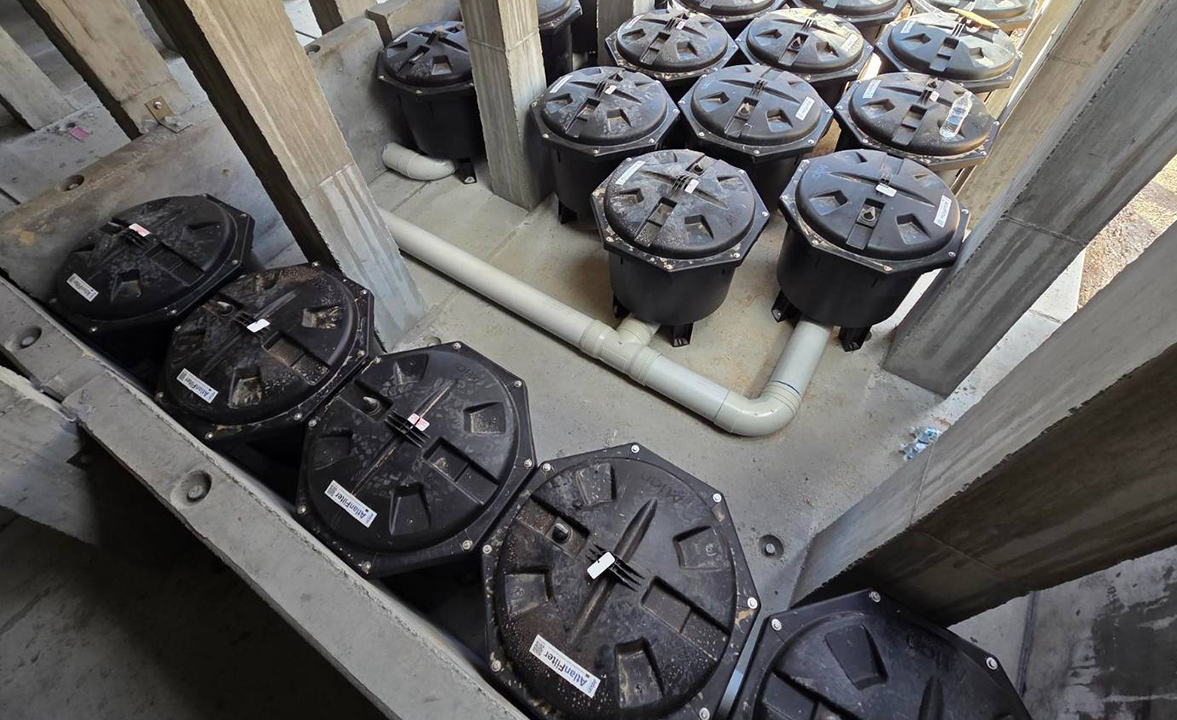
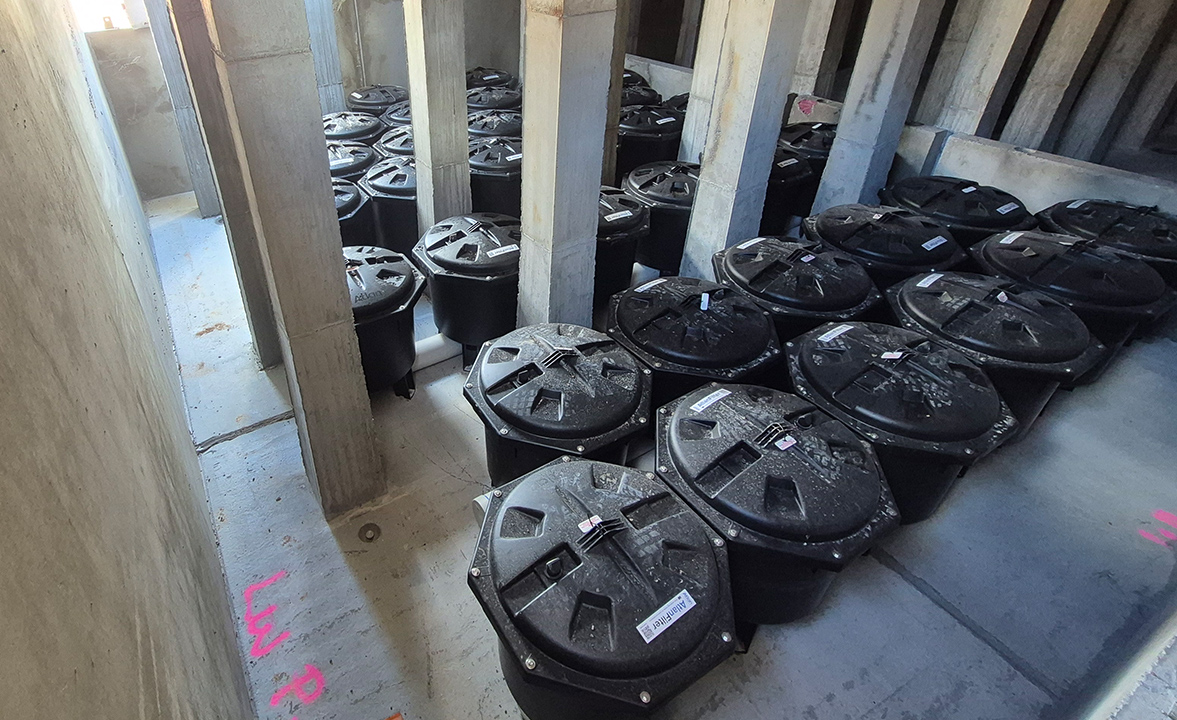
Compact footprint with fully customisable configurations, accommodating anywhere from 1 to an unlimited number of filter cartridges, making it ideal for constrained sites with minimal installation space.

Durable Construction

AtlanFilter’s design has no moving parts which increases reliability, longevity and durability.

How it Works

The AtlanFilter has an upflow treatment process that maximises surface area. The innovative cartridge filter system provides excellent pollutant removal in a small footprint.

Hydraulic pressure forces water through the filter media, which discharges through the centre tube and out through the outlet collection manifold.

Upon completion of a treatment cycle, each cartridge backwashes and effectively dislodges particulates from the filtration layers. This reestablishes filter media porosity. The dislodged particles accumulate on the vault floor for easy removal during maintenance. AtlanFilter’s design has no moving parts and generates a true siphon effect.

AtlanFilters are often installed downstream of nearby devices in a treatment train. For example, an Atlan GPT upstream greatly increases the life cycle interval of the AtlanFilter. These devices will remove larger gross pollutants, coarse sediments, total suspended solids and hydrocarbons – enabling the AtlanFilter to target fine particulate matter and nutrients.

Interactive 3D Drawing

Applications

Suitable for manholes, OSD tanks, vaults, and both trafficable and non-trafficable zones, providing adaptable stormwater solutions.

  • Car parks and Shopping Centres
  • Council Depots
  • Industrial Estates
  • Heavy Vehicle Maintenance
  • Airport Aprons & Tarmacs
  • Transport Depots & Loading Bays
  • Tunnels
  • Highways & Transport Corridors
  • Recycling Yards

Range

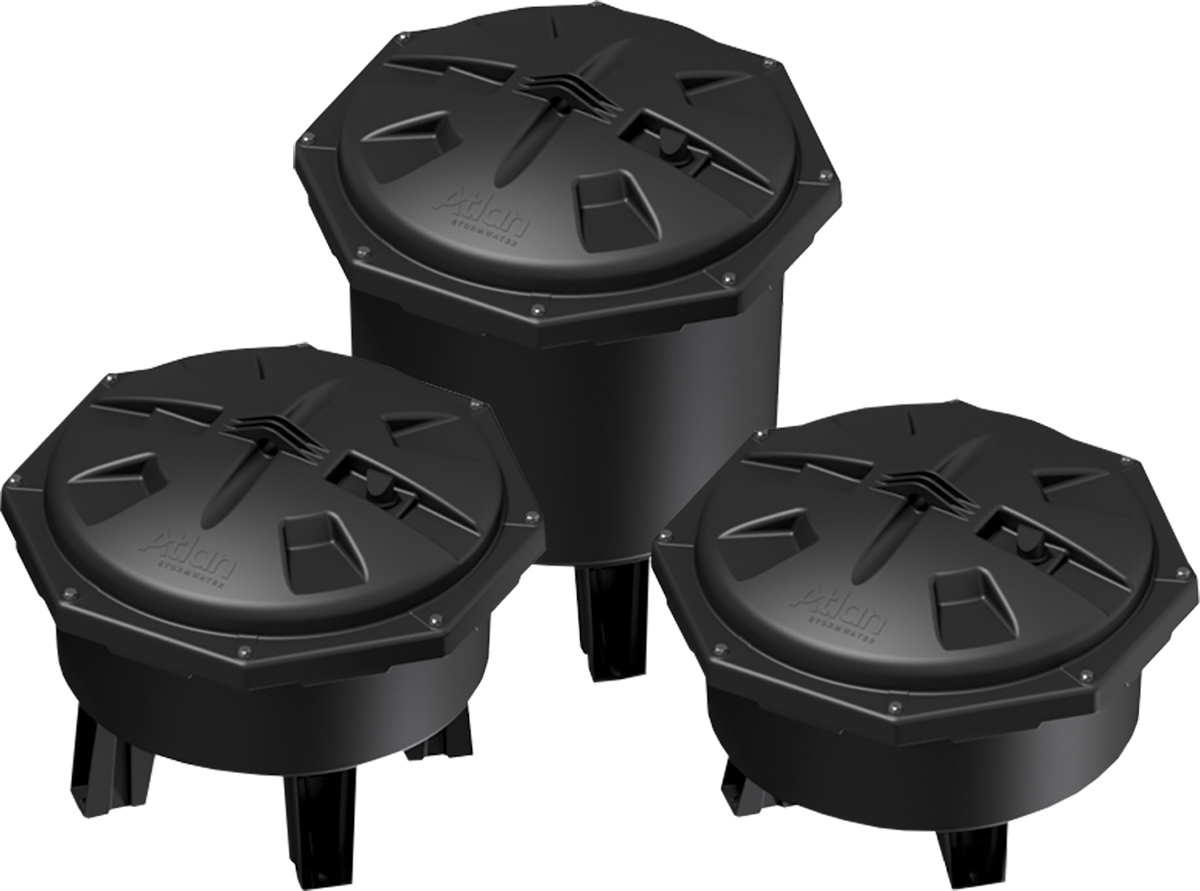
AtlanFilter STANDARD HEIGHT STANDARD HEIGHT Half Height HALF HEIGHT
AtlanFilter-Size-Full AtlanFilter-Size-Full-short AtlanFilter-Size-Half AtlanFilter-Size-HalfShort
Model FIL-3.0 FIL-3.0SF FIL-1.5 FIL-1.5SF
Legs Standard Short Standard Short
Overall height 850mm 750mm 615mm 515mm
Diameter 726mm 726mm 726mm 726mm
Minimum head required 850mm 750mm 550mm 450mm
Treatment flow rate 3.0L/s 3.0L/s 1.5 L/s 1.5 L/s
Filter outlet diameter 50mm 50mm 50mm 50mm

Certification

SQIDEP (Stormwater Quality Improvement Device Evaluation Protocol)

SQIDEP (Stormwater Quality Improvement Device Evaluation Protocol) is Stormwater Australia’s industry-leading framework, which sets uniform criteria for the field-testing and reporting of stormwater treatment devices.

These criteria guide and inform field monitoring and data collection to demonstrate pollutant removals for stormwater treatment measures included in pollutant export modelling software.

SQIDEP should be recognised to be a living document.

SQIDEP Test Treatment Efficiencies*

POLLUTANT EFFICIENCY
Total Suspended Solids (TSS) 85%
Total Phosphorus (TP) 74%
Total Nitrogen (TN) 59%

*Contact us to confirm approval performance for the project LGA.

Verification programs are unique to the locality and Approving Authority, and whilst they may be accepted across different geographic regions, programs often specify unique particle size distributions, pollutant concentration ranges and testing methodologies. For this reason, exercise caution when comparing performance between different programs, and ensure it is relevant to your location.

Environmental Product Declaration (EPD)

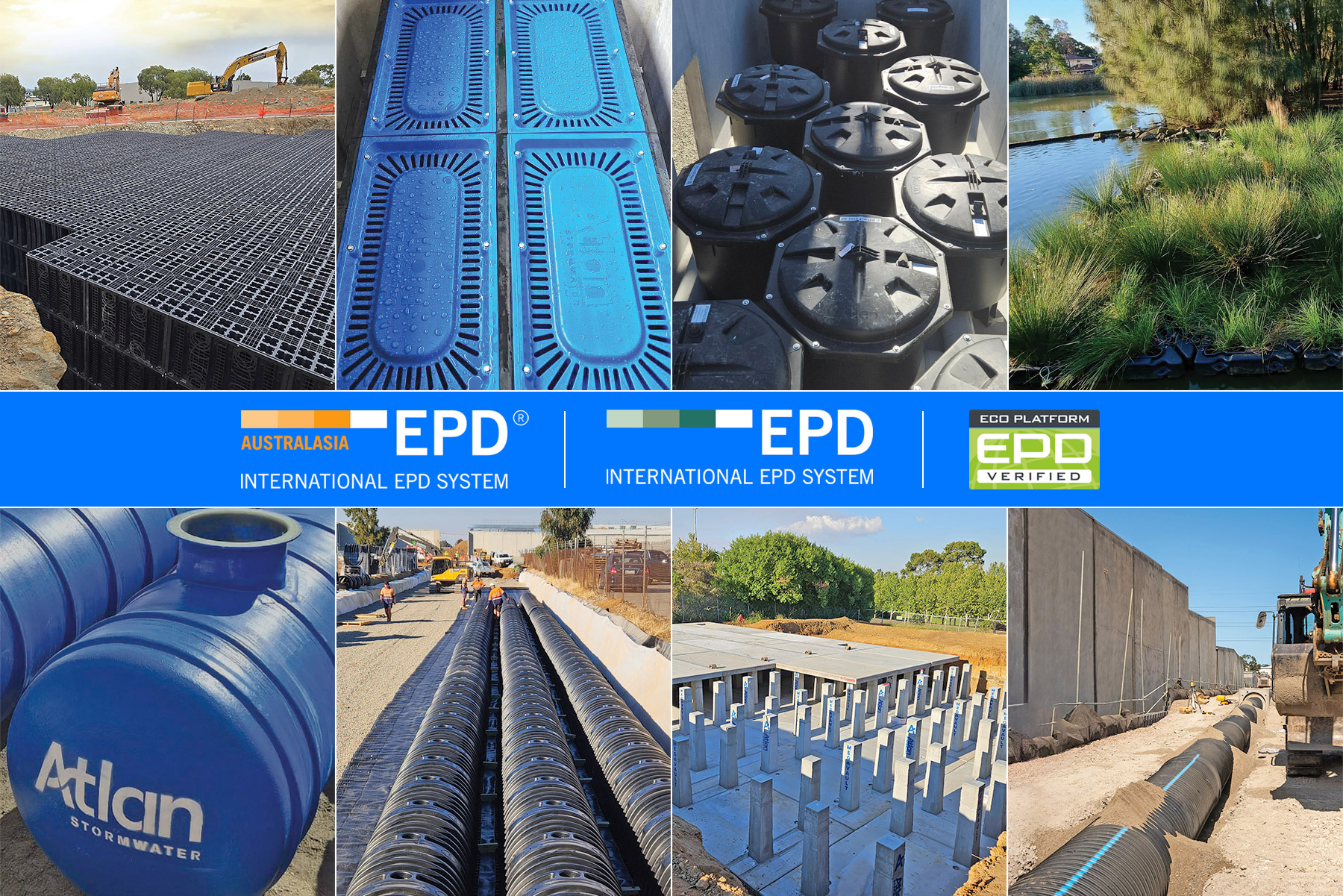
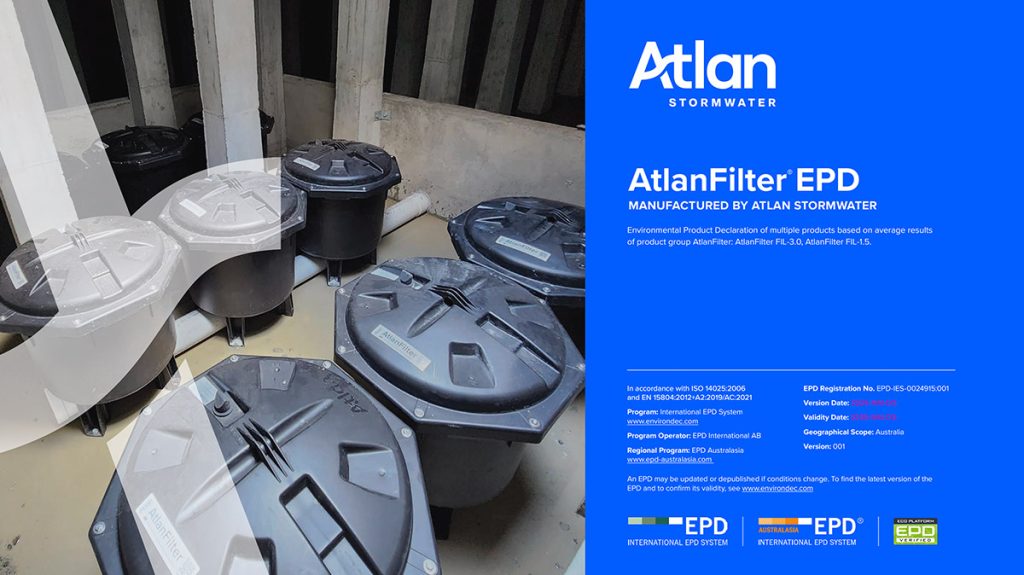
Our Environmental Product Declarations (EPDs) are independently verified and registered documents that communicate transparent information about the life-cycle environmental impact of our products, from raw materials through to carbon emissions and recyclability.

Verification programs are unique to the locality and Approving Authority, and whilst they may be accepted across different geographic regions, programs often specify unique particle size distributions, pollutant concentration ranges and testing methodologies. For this reason, exercise caution when comparing performance between different programs, and ensure it is relevant to your location.

Emerging stormwater treatment technologies TAPE designation

SQIDEP Test Treatment Efficiencies*

Washington State Department of Ecology TAPE program (Technology Assessment Protocol – Ecology) is America’s leading protocol for validating stormwater device performance.

Verification programs are unique to the locality and Approving Authority, and whilst they may be accepted across different geographic regions, programs often specify unique particle size distributions, pollutant concentration ranges and testing methodologies. For this reason, exercise caution when comparing performance between different programs, and ensure it is relevant to your location.
New Jersey Corporation for Advanced Technology (NJCAT)

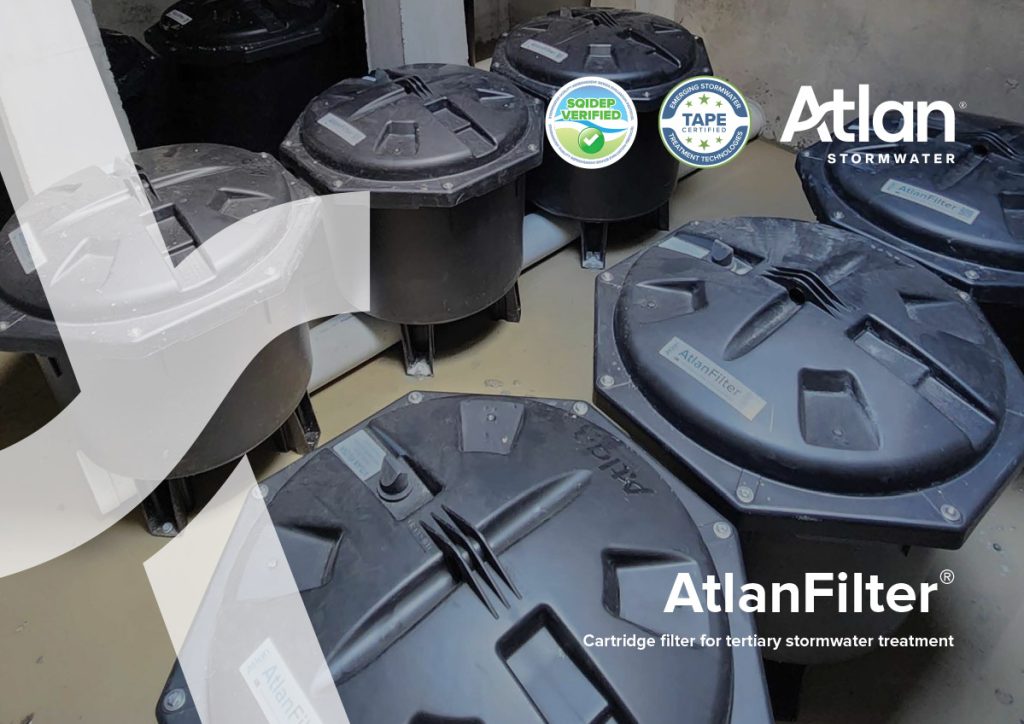
NJCAT Verification Program

NJCAT is one of America’s premier protocols for verifying stormwater device performance. It provides technology innovators with technical and regulatory support to bring innovative and emerging environmental technologies to market.

Verification programs are unique to the locality and Approving Authority, and whilst they may be accepted across different geographic regions, programs often specify unique particle size distributions, pollutant concentration ranges and testing methodologies. For this reason, exercise caution when comparing performance between different programs, and ensure it is relevant to your location.

Downloads

AtlanFilter Highlights

Highfields Land Lease Community: Unlocking 9,850 Square Metres of Developable Land
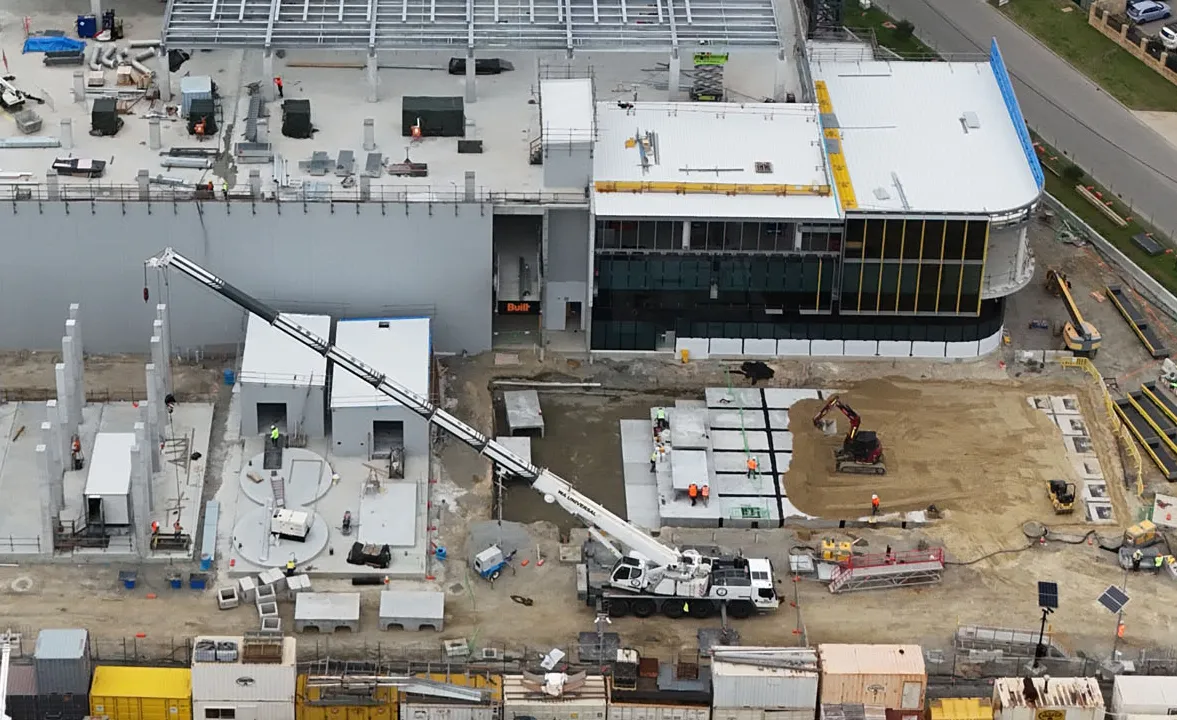
Learn how our stormwater solutions for Highfields LLC helped to maximise land yield, providing gains in developable space equivalent to 19 housing lots.

NSW Data Centre Policy Framework: Stormwater Solutions for Energy, Water & Environmental Compliance
Explore how Atlan's integrated stormwater solutions help data centre developments meet evolving water efficiency and environmental requirements.
NJCAT

AtlanFilter: Now Verified by NJCAT

AtlanFilter achieves NJCAT verification, demonstrating independently validated stormwater treatment performance for North American markets.
environmental product declarations-atlan

Bridging the Gap: Atlan Stormwater’s Environmental Product Declarations (EPDs)

Explore lifecycle-based data to help project teams make informed asset selections to deliver more sustainable stormwater infrastructure.

AtlanFilter: TAPE Designated Device Performance

AtlanFilter achieves recognition through Washington State’s TAPE program, strengthening confidence with independently verified stormwater treatment performance.

AtlanFilter (SPEL Filter) FAQ

Total Suspended Solids (TSS) refer to solid particles suspended in water, which can include materials like silt, decaying plant matter, industrial waste, and sewage. High levels of TSS can harm aquatic life, reduce water quality, and contribute to the pollution of water bodies. 

The AtlanFilter is designed to effectively remove 85% of TSS from stormwater, helping to maintain environmental standards and improve water quality by providing capabilities for the removal of heavy metals and other pollutants. 

Stormwater treatment typically involves three stages:

  • Primary Treatment: The first stage involves removing larger particles and debris from the water using screens, sedimentation basins, or grit chambers that trap and settle out solids.
  • Secondary Treatment: This stage focuses on reducing organic matter, hydrocarbons, and smaller suspended solids that remain after primary treatment. Separation, biological process, and filtration are commonly used in this stage to further purify the water.
  • Tertiary Treatment: The final stage, tertiary treatment, involves advanced filtration methods to remove finer particles, nutrients, heavy metals, and other contaminants that were not captured during primary and secondary treatments. The AtlanFilter system is a tertiary treatment solution, providing a high level of pollutant removal, including TSS, Total Phosphorus (TP), and Total Nitrogen (TN).
The AtlanFilter uses a cartridge-based tertiary filtration system that incorporates an upflow treatment process. Water is forced through the filter media by hydraulic pressure, ensuring a consistent velocity and media contact time. This design, combined with a self-regulating siphon and automatic backwash after each storm event, results in a low-maintenance, high-performance stormwater filtration system.

The AtlanFilter is optimised to remove specific pollutants, including 85% of Total Suspended Solids (TSS), 74% of Total Phosphorus (TP), and 59% of Total Nitrogen (TN). Its advanced filtration also targets heavy metals and other contaminants, making it highly effective in treating stormwater runoff in various applications, such as car parks, industrial estates, and transport depots.

MUSIC (Model for Urban Stormwater Improvement Conceptualisation) is a tool for improving stormwater management. You can access the MUSIC models for the AtlanFilter specific to your region or council in Australia by downloading them from our website.

The Atlan SediFilter is our AtlanFilter analogue for sediment control applications – such as construction sites, ongoing development, civil works and infratructure projects. Using a similar filter cartridge configuration to AtlanFilter, the Atlan SediFilter is specifically designed for the capture of sediment and construction sediment such as sand, soil, cement and other building materials.

Scroll to Top