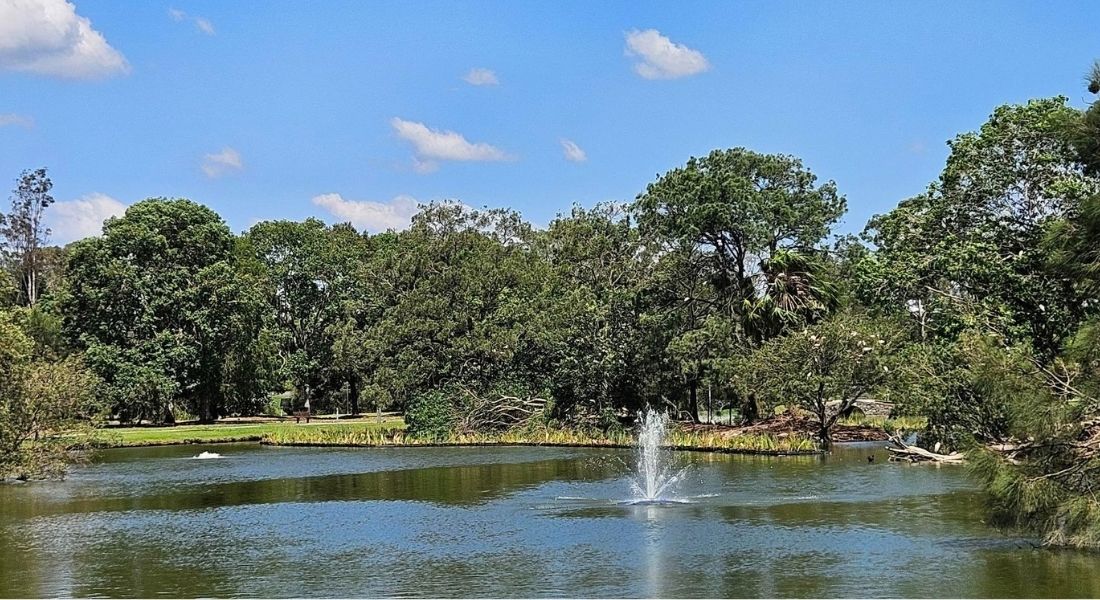
Named by locals as the ‘Duck Ponds’ Lake Alford Recreational Park is one of Gympie’s most recognisable family spaces. A popular destination for birdwatchers, residents, and visitors, the park offers a peaceful backdrop for picnics, leisure activities, and an off-leash dog area.
Providing habitat for a wide range of native species, birdlife that inhabit the park include White Faced Herons, Black Swans, Little Pied Cormorants, Forest Kingfishers, and Royal Spoonbills.
Maintaining healthy aquatic habitat is a key objective of Lake Alford’s ongoing rehabilitation, with restoration efforts focused on improving both ecosystem function and long-term water quality after floods damaged the park in 2022. Restoration efforts include the stabilisation of the lake’s banks, establishment of sandstone terraces, and the planting of 25,000 native trees, grasses, and aquatic plants to reinvigorate the park’s ecosystems.
Supporting these site works, Atlan Stormwater’s Floating Treatment Wetland (FTW) installation complements the broader objectives of Lake Alford’s restoration. These initiatives demonstrate how nature-based stormwater infrastructure can complement long-term site works to improve water quality, biodiversity and community amenity
Creating Habitat & Improving Water Quality
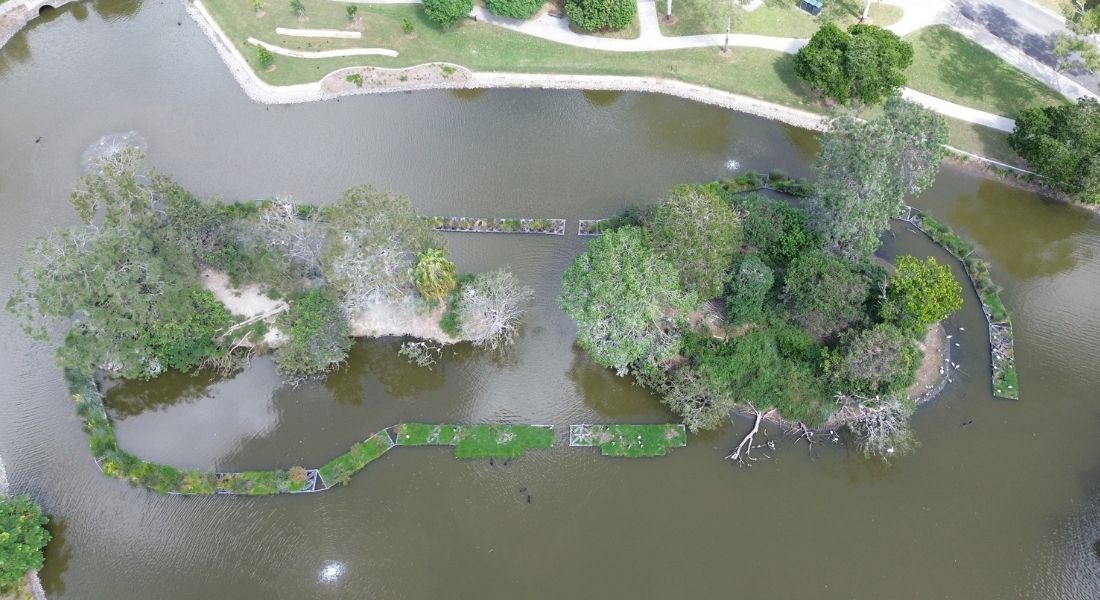
Surrounding the park’s central island, the Floating Treatment Wetlands comprise several series of interconnected floating
wetland modules installed in a large open ring configuration. The Floating Wetlands has been installed in a two module width – and has an overall perimeter of approximately 100 metres by 30 metres.
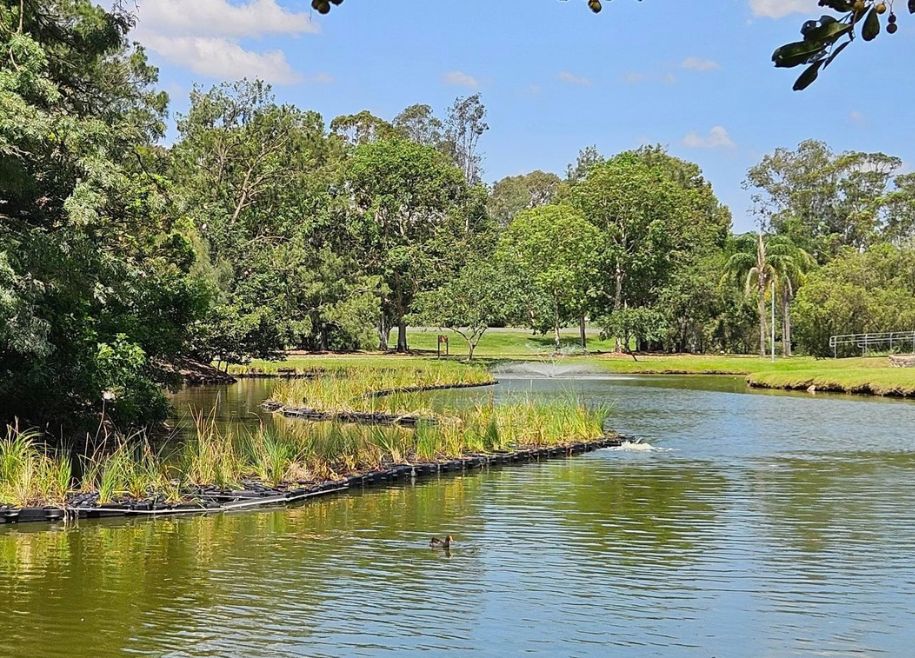
This system delivers multiple benefits to local environments, including nutrient reduction, habitat creation, biodiversity enhancement and beautification. The ability for these units to rise and fall with the water level of the lake provides resilience to fluctuating lake levels and storm flows.
The scale of the installation creates extensive vegetated habitat that supports local birdlife while also establishing aquatic ecosystems beneath the water surface. Plant foliage and submerged root systems provide refuge and breeding habitat for a range of invertebrate species, including dragonflies, worms, beetles and snails, which contribute to the development of local food webs that support fish populations and the many waterbirds that inhabit Lake Alford.
As plant root systems develop beneath the floating structure, they create a large, interconnected surface area for biofilm colonisation. These microbial communities are fundamental to stormwater treatment and improved water quality.
These submerged root networks contribute to stormwater treatment through multiple processes. Nutrients such as nitrogen and phosphorus are assimilated by the plants, while the extensive microbial communities in the biofilm accommodate organic matter breakdown.
As stormwater passes through the dense root network, suspended sediments are intercepted by the biofilm and root mass. The sediment accumulates, then falls and settles, providing better removal of TSS (Total Suspended Solids) than a constructed wetland relying on gravity and attenuation times alone.
A benefit of these systems is that they minimise land take for treatment infrastructure, the Floating Treatment Wetlands floats on top of the waterbody, which conserves the foreshore for use by the community or for further council rehabilitation efforts.
Projects such as Lake Alford demonstrate the expanding role of Floating Treatment Wetlands in Water Sensitive Urban Design (WSUD) projects. These assets offer an adaptable combination of sustainable engineering benefits, habitat creation and opportunities to plant native flora.
For councils and asset owners seeking to maximise the environmental performance of existing lakes, ponds and stormwater basins, Floating Treatment Wetlands provide a practical retrofit solution that integrates seamlessly into established watercourses. This makes Floating Treatment Wetlands particularly attractive for councils seeking to improve the performance of existing stormwater assets without the cost or disruption associated with major civil works.
The Lake Alford project demonstrates how nature-based engineering can support broader catchment rehabilitation initiatives, delivering Joy in Water outcomes and protecting our waterways.