
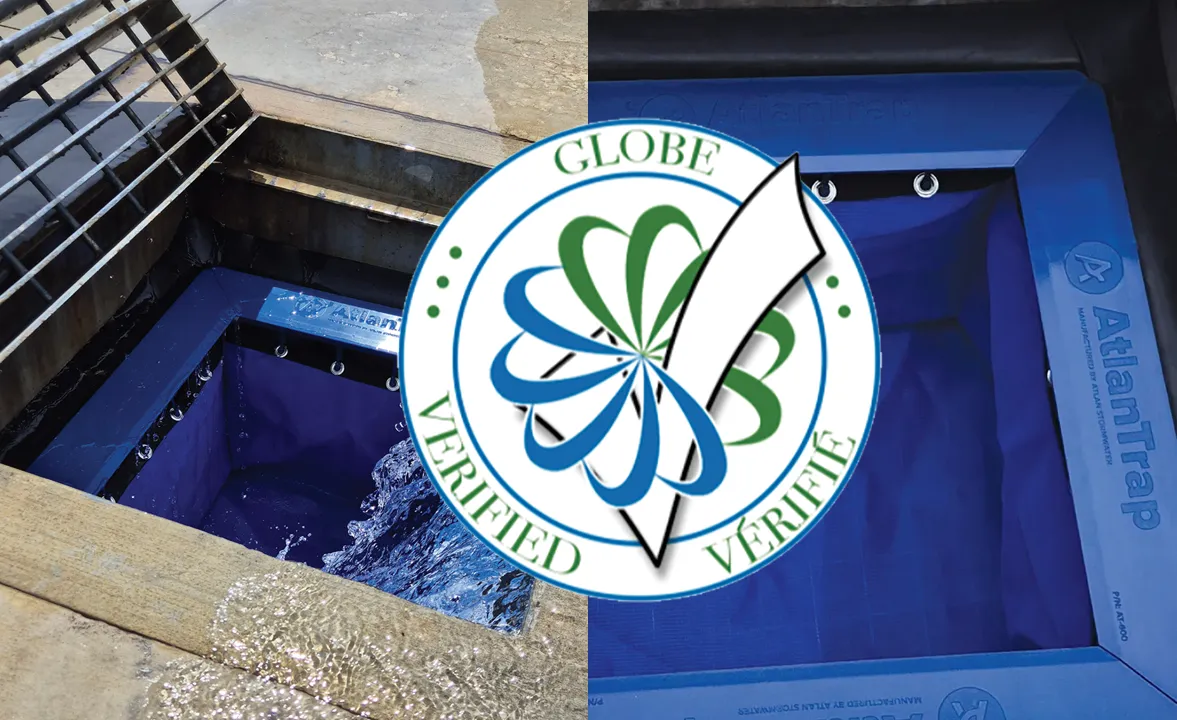
Joining our Canadian Environmental Technology Verification (ETV) range, AtlanTrap is our latest device to receive independent performance verification through this leading framework for sustainability and innovation.
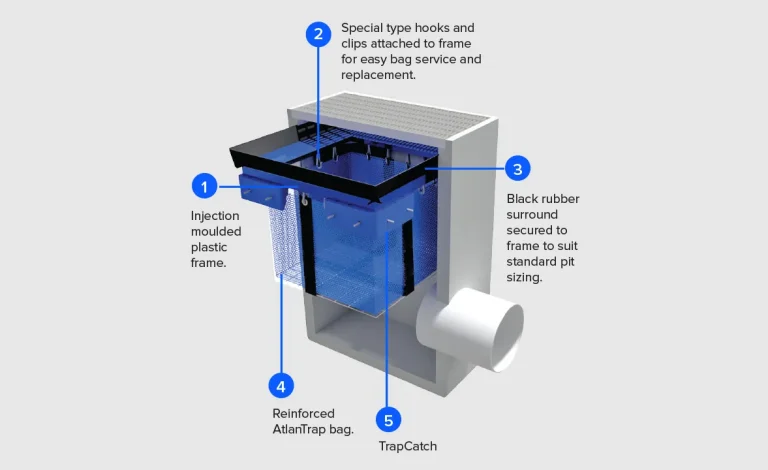
AtlanTrap is a stormwater quality improvement device designed to capture a wide range of pollutants, including floatable trash, debris, coarse and fine suspended sediments, and associated particle-bound pollutants such as nutrients and heavy metals.
In accordance with ISO14034:2016 Environmental management – Environmental technology verification (ETV), AtlanTrap demonstrated pollution removal rates of –
- Total Suspended Solids (TSS): 45%
- Total Phosphorus (TP): 47%
- Total Nitrogen (TN): 25%
- Gross Pollutants: 100%
Deployed at-source in urban catchments, AtlanTrap offers a decentralised approach to water quality management that aligns with low impact development (LID) strategies. Installed within existing infrastructure, such as stormwater drains, kerb inlets, pits and catch basins, AtlanTrap enables GPT (Gross Pollutant Trap) and tertiary filtration capabilities to be integrated across micro-scale catchments.
AtlanTrap captures pollutants close to the surface while providing simple installation and maintenance. This helps reduce operational costs and minimise site disruption during installation, commissioning and maintenance.
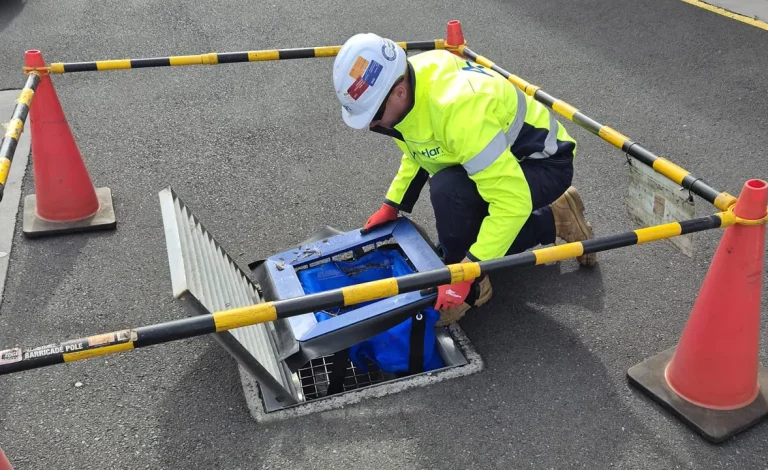
Accessible directly from site surface, AtlanTrap is quick and safe to service – without requirements for confined space entry or on-site machinery.


Microplastic Reductions: Treating for Emerging Pollutants
Collaborative research has also highlighted AtlanTrap’s treatment capabilities for microplastic pollution, which includes particles generated through tyre and road wear. Testing demonstrated substantial reductions in microplastic concentrations following treatment, showing the role of stormwater infrastructure in controlling emerging pollutants.
Across this body of research, AtlanTrap (formerly StormSack) filtration captured between 35% and 88% of microplastic concentrations. Results varied depending on site-specific conditions, including traffic characteristics and the composition and condition of road surfaces.
This additional treatment capability makes AtlanTrap a valuable solution for managing a broader range of pollutants in runoff from areas such as car parks, townhouse developments, transport yards and sites connected to road networks.
AtlanTrap: ETV Verification & Independent Testing
Environmental Technology Verification (ETV) provides pathways for the validation of stormwater device performance, which supports developers, regulators, and engineers to make informed decisions during project design and asset selection.
AtlanTrap joins FlowFilter as part of our ETV verified devices, expanding our growing portfolio of North American certifications. These also include NJCAT certification for AtlanFilter, and TAPE designation for AtlanFilter, FlowFilter and FlowGuard.
Third-party verification builds credibility and confidence by using high-quality, independent test data to provide assurance that devices perform as claimed.
We believe clean waterways are a right, not a privilege. Our commitment to driving best practice stormwater engineering supports our network of clients and distributors to leverage environmental compliance and generate additional project value.
Achieving internationally recognised verifications ensures that our stormwater assets are fit for purpose, serving local communities by protecting waterways and ensuring Joy in Water for future generations.

Verification programs are unique to the locality and Approving Authority, and whilst they may be accepted across different geographic regions, programs often specify unique particle size distributions, pollutant concentration ranges and testing methodologies. For this reason, exercise caution when comparing performance between different programs, and ensure it is relevant to your location.