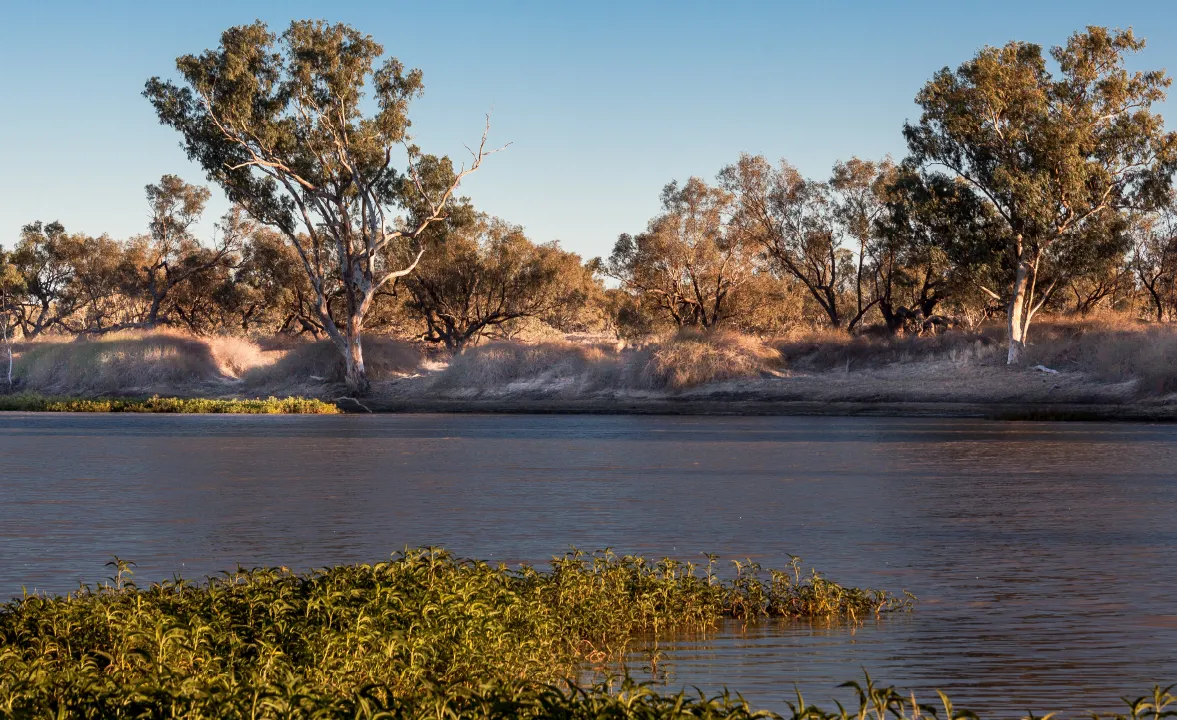
Recognised as one of Australia’s Ramsar Wetlands of International Importance, the Coongie Lakes are among South Australia’s most spectacular freshwater landscapes. This vast 2.1 million hectare network of lakes, channels, billabongs, floodplains, deltas and swamps comes to life with the seasonal floodwaters of Cooper Creek, creating one of the nation’s most ecologically significant inland wetland systems.1
Located in the Malkumba-Coongie Lakes National Park in South Australia’s far north-east, the wetland system is one of Australia’s most pristine and remote – approximately 100 kilometres from the outback township of Innamincka, and 1,050 kilometres north of Adelaide.2
The park offers true outback wilderness experiences for visitors seeking solitude in nature, requiring full self-sufficiency with zero-facility bush camping. Visitors willing to adventure are rewarded with camping, canoeing, bushwalks and one of the most untouched waterways in the country.
Coongie Lake receives inflows no less than eight times in any ten-year period, with no dry period lasting longer than twelve consecutive months. Receiving cyclical flood pulses, the influx of water results in rapid plant growth and the migration of huge numbers of waterbirds to feed and breed, with more than fifty-five species recorded using the site as a breeding ground.3
This spectacle has recorded migrations of up to 100,000 Australian pelicans, along with a large variety of Australian native wildlife, including Freckled Ducks, Black-winged Stilts, Yellow-billed Spoonbills, and Great Cormorants.3
The Coongie Lakes wetlands also play an essential role within the broader Lake Eyre Basin. Floodwaters recharge groundwater systems, transport nutrients throughout the landscape and sustain habitats that support fish, amphibians and countless other aquatic organisms.4
Coongie Lakes is fed primarily by the unregulated, free-flowing waters of Cooper Creek. As monsoonal downpours in central and western Queensland fill catchments, they send billions of litres of water to slowly wind through Cooper Creek – eventually spilling out over South Australia’s vast, flat floodplains.5
This natural connectivity demonstrates the importance of protecting our pristine riverine catchments and riparian environments, ensuring they can receive flows that sustain healthy ecosystems. We believe clean waterways are a right, not a privilege.
REFERENCES
1 https://www.parks.sa.gov.au/parks/malkumba-coongie-lakes-national-park
2 https://gba-explorer.bioregionalassessments.gov.au/coo/items/item/55/0
3 https://www.dcceew.gov.au/water/wetlands/australian-ramsar-wetlands/coongie-lakes
4 https://www.dcceew.gov.au/sites/default/files/documents/27-ecd.pdf
5 https://wilderness.org.au/goyder-lagoon-coongie-lakes-kallakoopah-creek