
The village of Turangi lies 50 kilometres south-west of the regional centre Taupo on the banks of the Tongariro River. A tourist town on the entrance to New Zealand’s oldest national park, Tongariro National Park, the area is known for its dual World Heritage status.
Turangi and the Tongariro River are reputable fly-fishing destinations with pristine waterways that flow into southern Lake Taupo. The Tongariro River’s winding, pooling bends provide diverse riverine habitats for Rainbow and Brown Trout, offering unforgettable fishing throughout the year.
Stormwater management strategies across Turangi and its surrounding areas are imperative for protecting local ecosystems. By integrating stormwater assets in the Turangi community, pollution can be captured, preventing its conveyance downstream to rivers, creeks, and wetlands.
High Performance GPT for Capturing Urban Pollutants
A retrofit of a Vortceptor Gross Pollutant Trap (GPT) will bolster stormwater management infrastructure for Turangi and treat stormwater from the town’s catchments prior to discharge into the waterways and wetlands of nearby Kohineke Recreation Reserve.
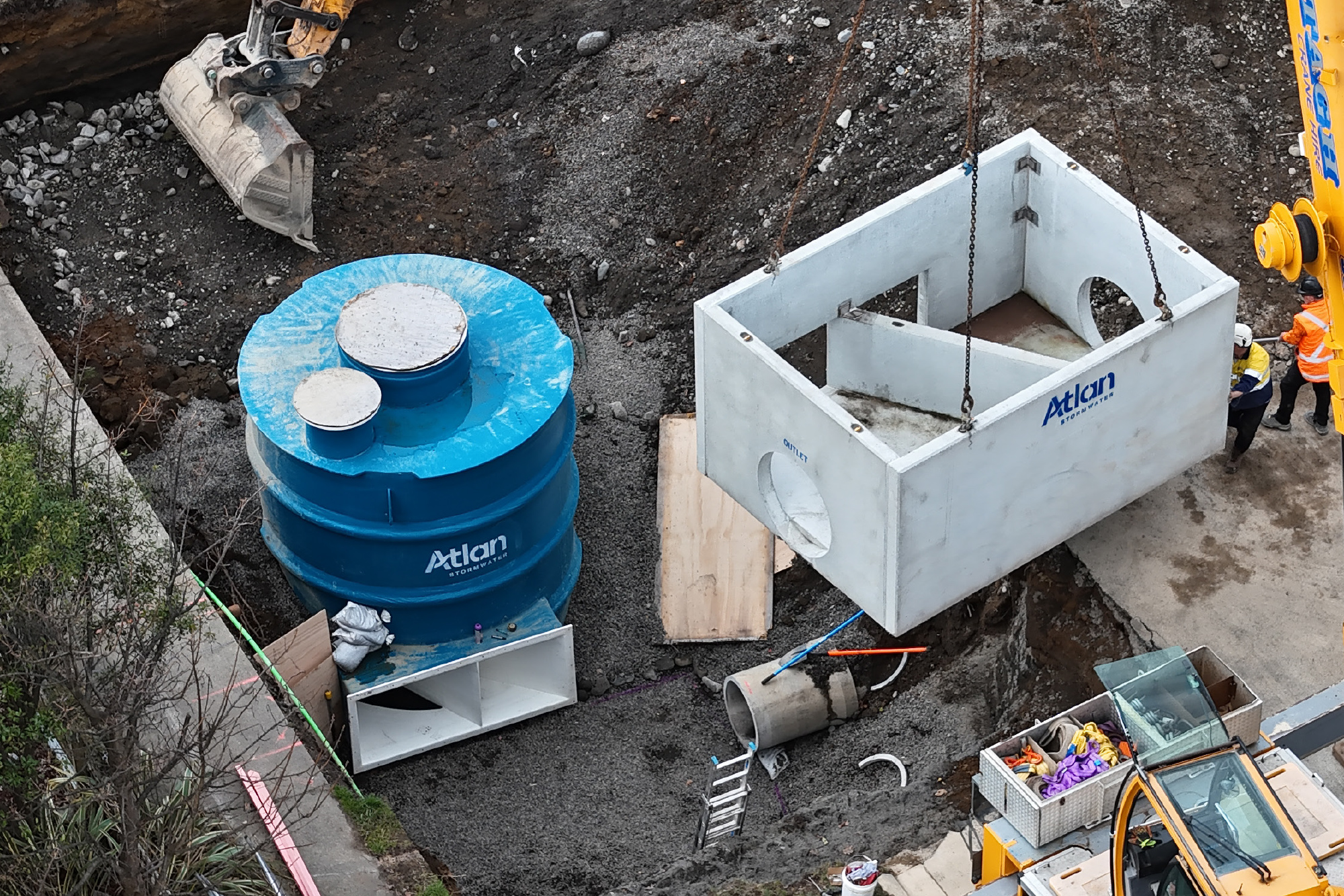
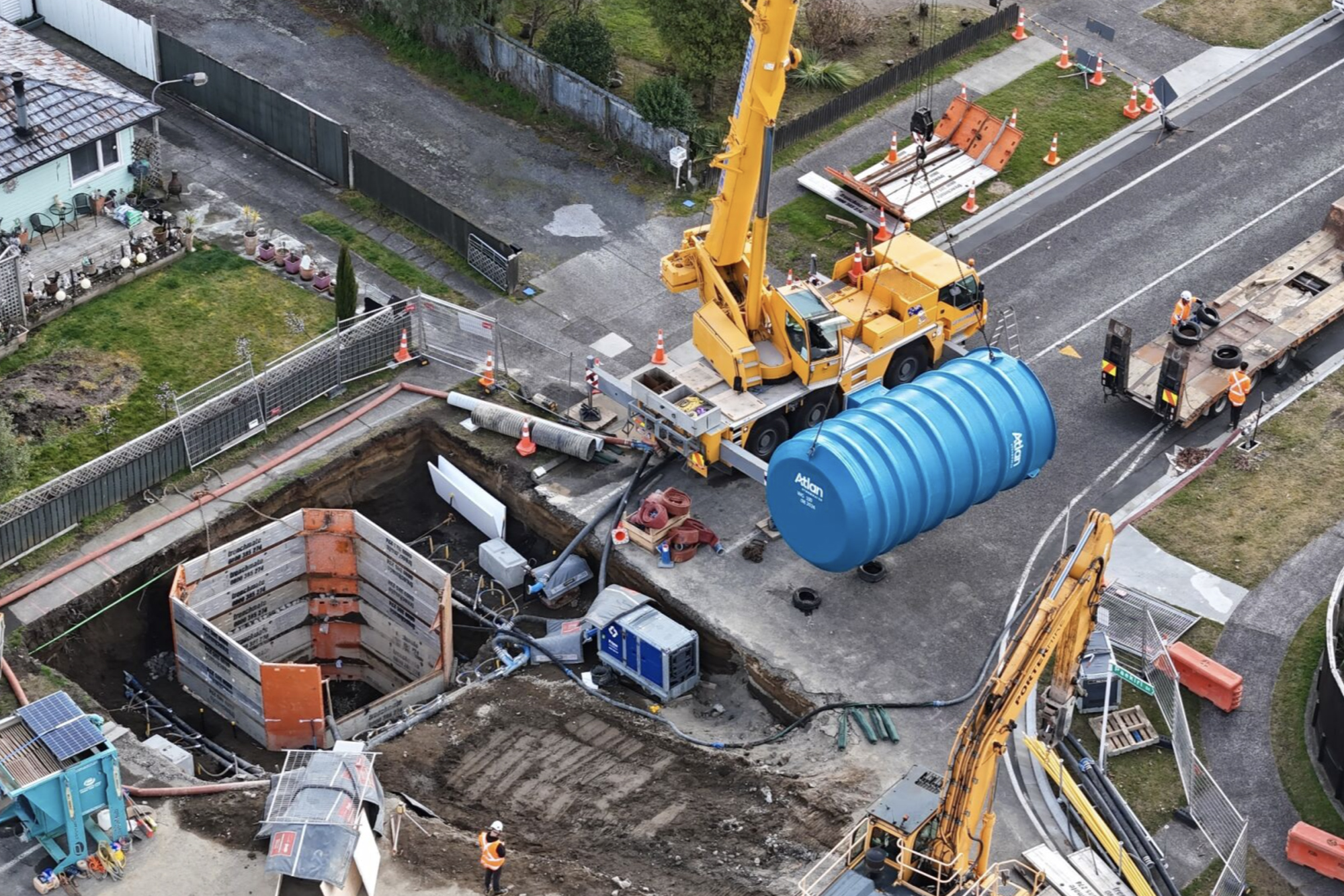
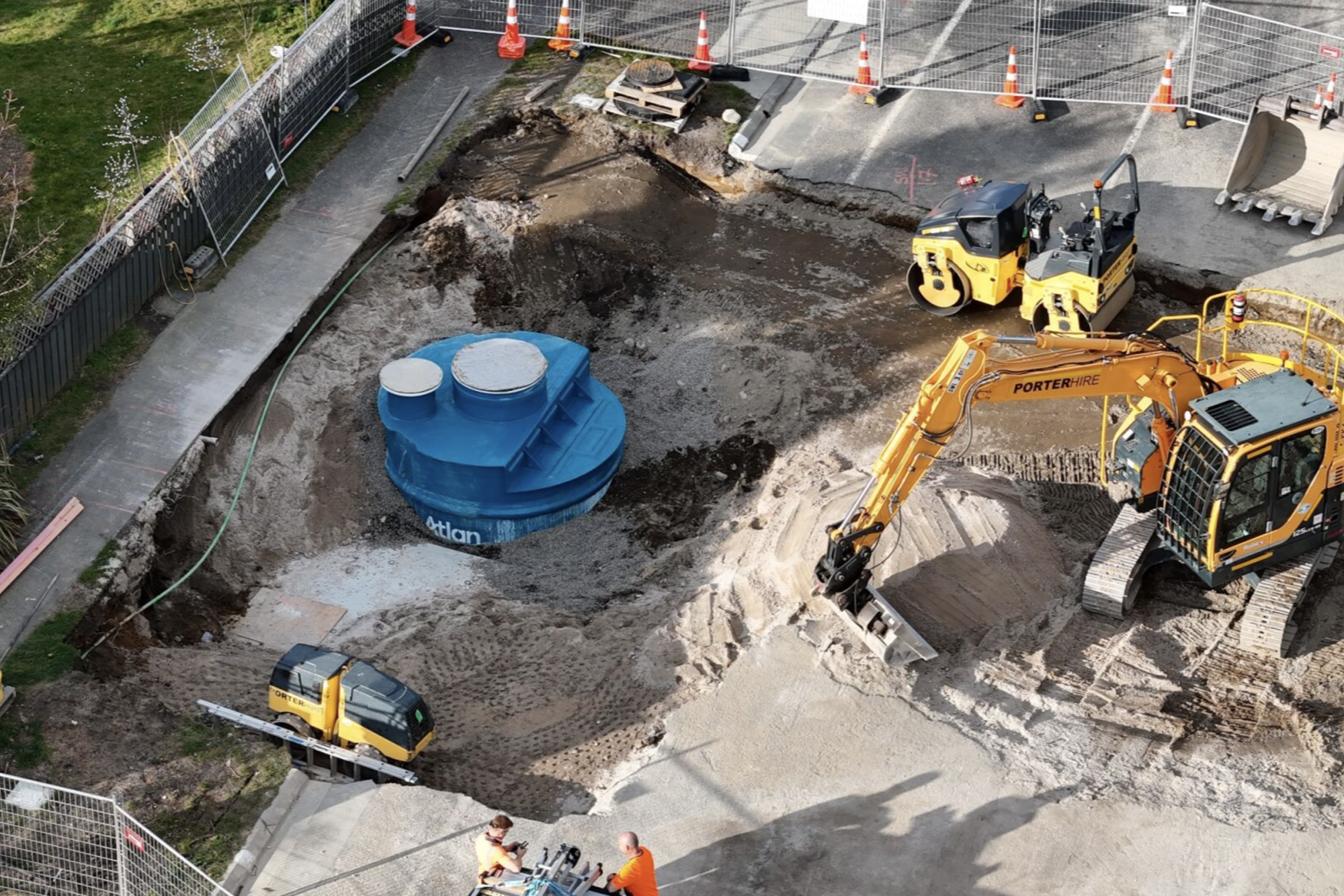
Installed beneath an active roadway, an SVO530 Vortceptor and Atlan diversion chamber will handle the site’s high-volume flows with its treatment flow rate of 530 litres per second. This offline solution will meet the site’s bypass and pipe size requirements, while also providing full trafficability.
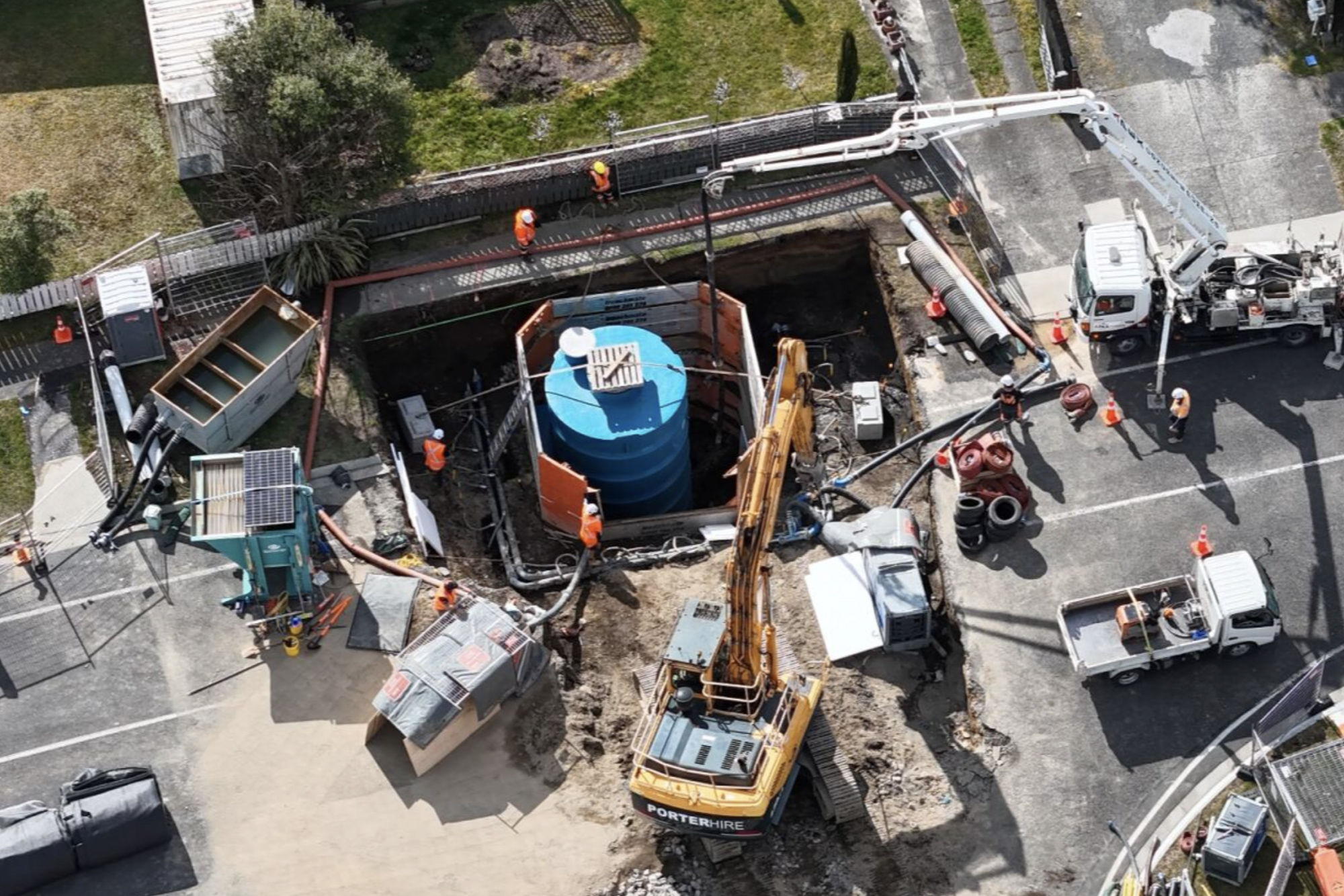
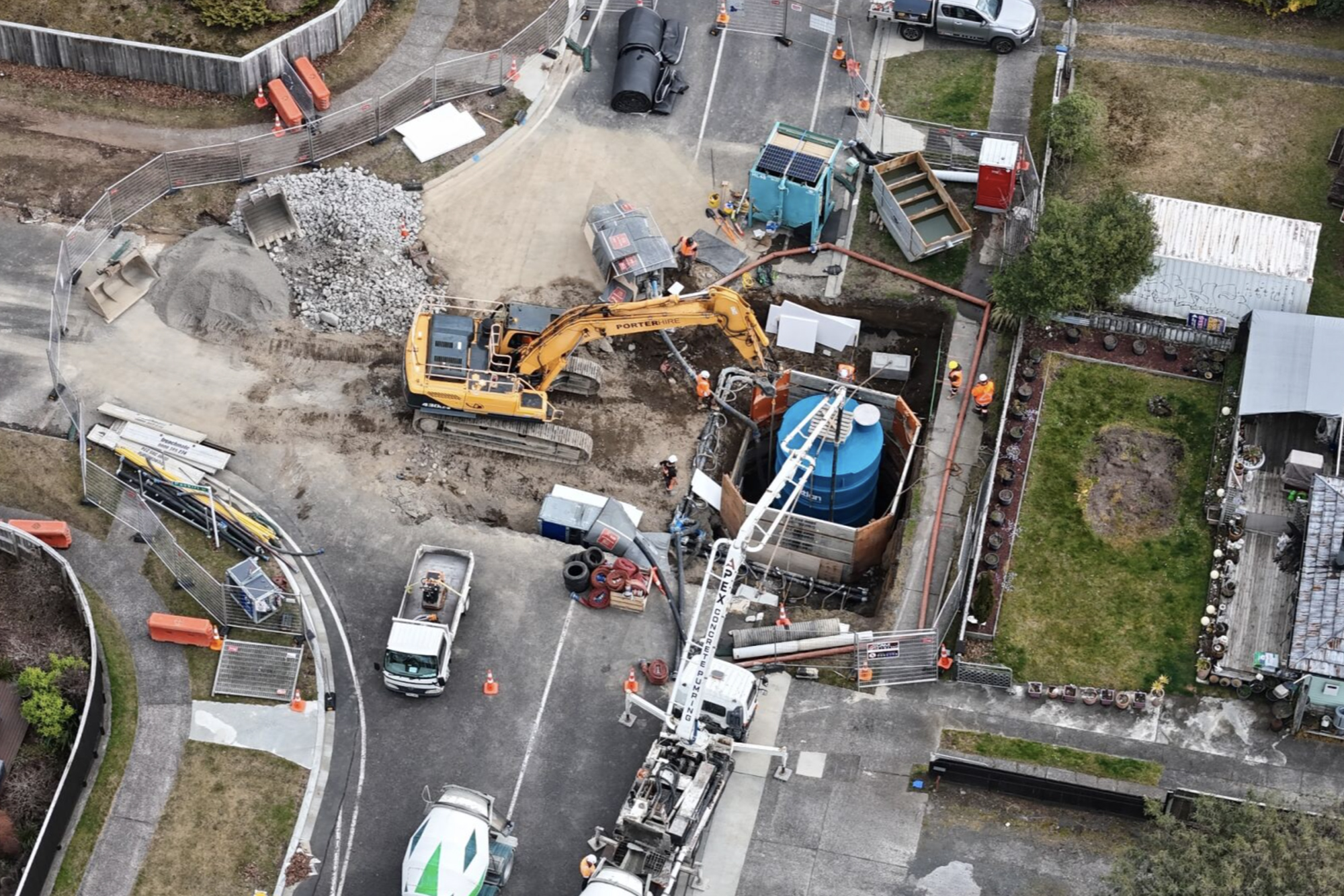
Originally planned for installation fully off the roadway, the Vortceptor had to be shifted partially into the traffic lane during construction. This required an on-site modification to the unit — a task made straightforward due to its fibreglass construction, which allowed the team to adjust the structure quickly without delaying the programme.
The site also presented very high groundwater, which would have significantly increased dewatering costs during installation for a traditional concrete GPT. The Vortceptor’s single-piece fibreglass unit enabled rapid installation, allowing the contractor to set the structure and backfill before groundwater could accumulate, dramatically reducing dewatering requirements and overall installation cost – while minimising community disruption.
This combination of Vortceptor and precast diversion chamber assets provide benefits in live retrofit applications, with reduced installation times showcasing the ease of integrating these modular systems in tight urban footprints.
Key features of the Vortceptor in WSUD (Water Sensitive Urban Design) applications include 100-year fibreglass design life, SQIDEP verified performance, and reduced operational expenditure through ease of maintenance.
Vortceptor’s hydrodynamic separation technology captures gross pollutants, sediments, hydrocarbons, and nutrients to safeguard downstream ecosystems – making it an ideal solution for protecting the Tongariro River.
SQIDEP is Australia’s leading framework for testing and verifying device performance, and Vortceptor has verified removal efficiencies of 93% Total Suspended Solids (TSS), 86% Total Phosphorus (TP), 49% Total Nitrogen (TN), and 100% Gross Pollutants.
Located at the foot of the Tongariro River catchment, our Turangi retrofit exemplifies our role as Zero Pollution Ambassadors in protecting our waterways through the integration of high-performance stormwater treatment infrastructure.
This Vortceptor installation will play a key role in protecting the area’s wetlands and waterways, and the downstream environments of Lake Taupo, ensuring Joy in Water for future generations and preserving the Tongariro River’s status as the ‘Trout Fishing Capital of the World’.