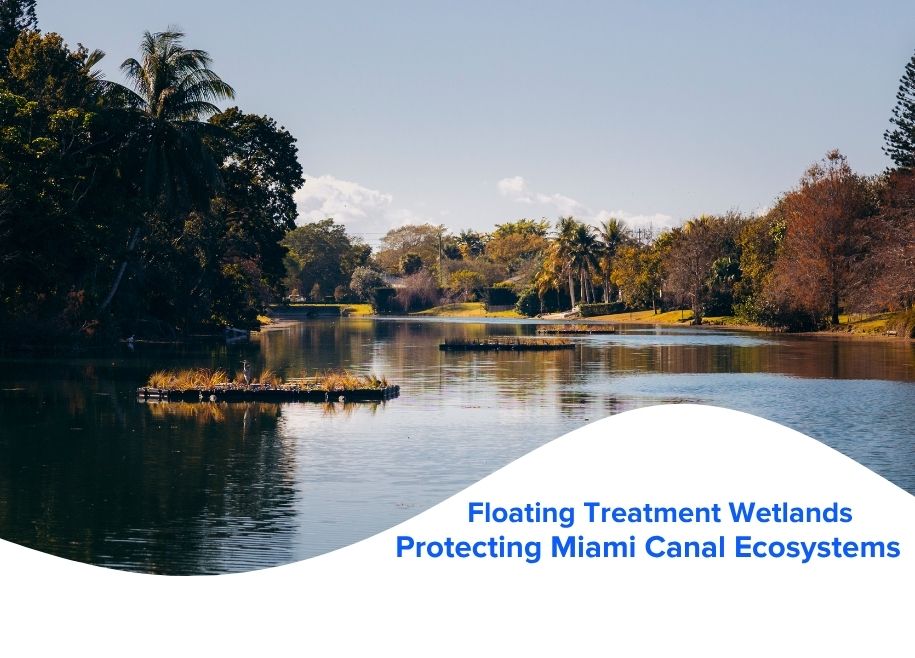
Located eleven miles from downtown Miami, the Village of Pinecrest, Miami-Dade County, South Florida, is renowned for its highly livable community. The village’s tree-lined streets, natural urban spaces, and vibrant residential areas are supported by the area’s progressive sustainable development and environmental initiatives.
The location of our latest Floating Treatment Wetlands pilot program, Pinecrest, is exploring the benefits of using modular wetland technology to address invasive weed species, improve water quality outcomes, and beautify local community spaces.
With a network of local urban waterways leading into Miami’s Biscayne Bay, stormwater management and pollution reduction are key outcomes for protecting the area’s canal ecosystems and receiving watershed.
This pilot program aims to tackle water pollution and invasive aquatic plants in local canals – with a key target being hydrilla, a fast-growing pest species that crowds canal ecosystems, competes with native vegetation, and releases foul odours.
Mitigating the impacts of stormwater pollution is vital for maintaining water quality in Miami’s coastal region and protecting Joy in Water for future generations. These Floating Treatment Wetlands will remove nutrients and various stormwater pollutants, helping alleviate downstream issues such as eutrophication and associated algal blooms.
This project represents Atlan’s first Floating Treatment Wetlands (FTW) pilot installation in the region, providing a scalable, modular solution to rehabilitate residential canal networks and support broader Biscayne Bay restoration objectives.
Supporting Cleaner Waterways: Three Floating Treatment Wetland Islands
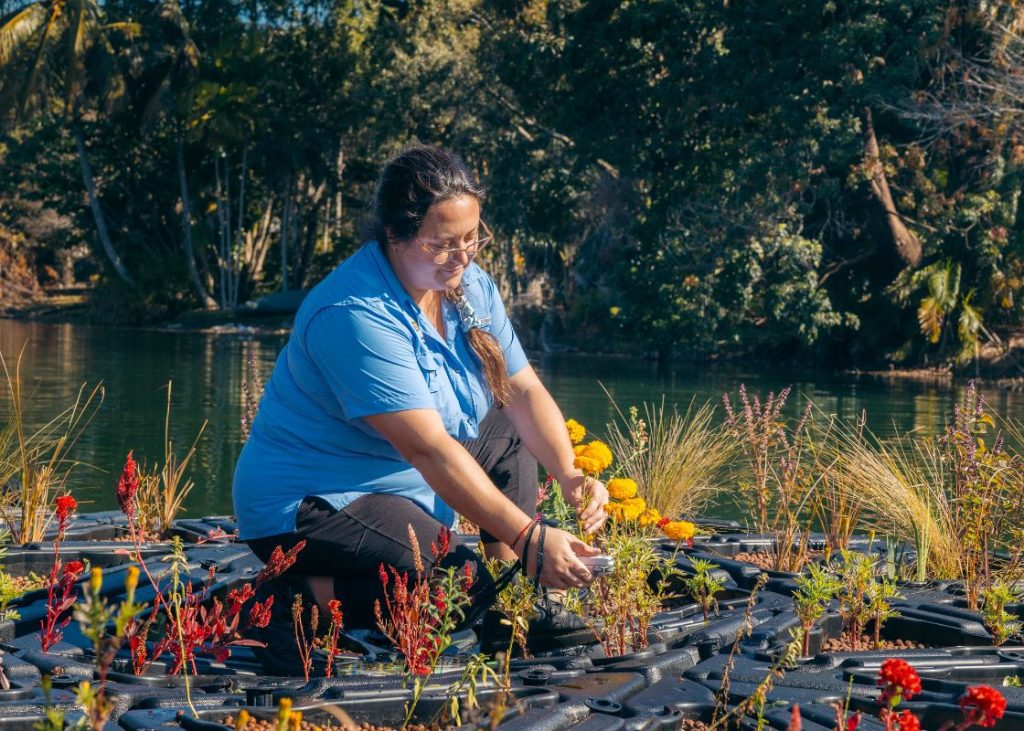
Atlan Stormwater’s FTW assets in Pinecrest have been configured in three Floating Flower islands consisting of 68 modules each. Deployed in 6×6 square configurations with recessed corners, each island provides approximately 110 square feet (34 square metres) of footprint, with a combined coverage of 330 square feet (100 square metres).
The FTW was installed by Phytoflora, an initiative of Green Thumb Strategies LLC, a South Florida based environmental practice. Two of the islands were funded by the Village of Pinecrest through its Stormwater Fund and are implemented as an official Pinecrest initiative focused on improving local canal water quality.
All three islands are monitored in partnership with Florida International University through a grant from the United States Department of Agriculture, which also supported installation of the third island. The research and field implementation are led by Dr. Jazmin Locke Rodriguez, who serves as Lead Scientist and Project Manager for the program.
This two-year pilot evaluates plant growth, nutrient removal through harvest-based biomass extraction and changes in water quality over time, generating field scale data to inform future municipal adoption and regional scaling.
Contending with water depths of 20 feet (6.1 metres), a bridled anchoring system was used to accommodate tidal fluctuations and hurricane-zone requirements for resilience to high wind conditions. This also avoided the use of shoreline for anchorage, which will help preserve visual amenity and minimize environmental disruption.
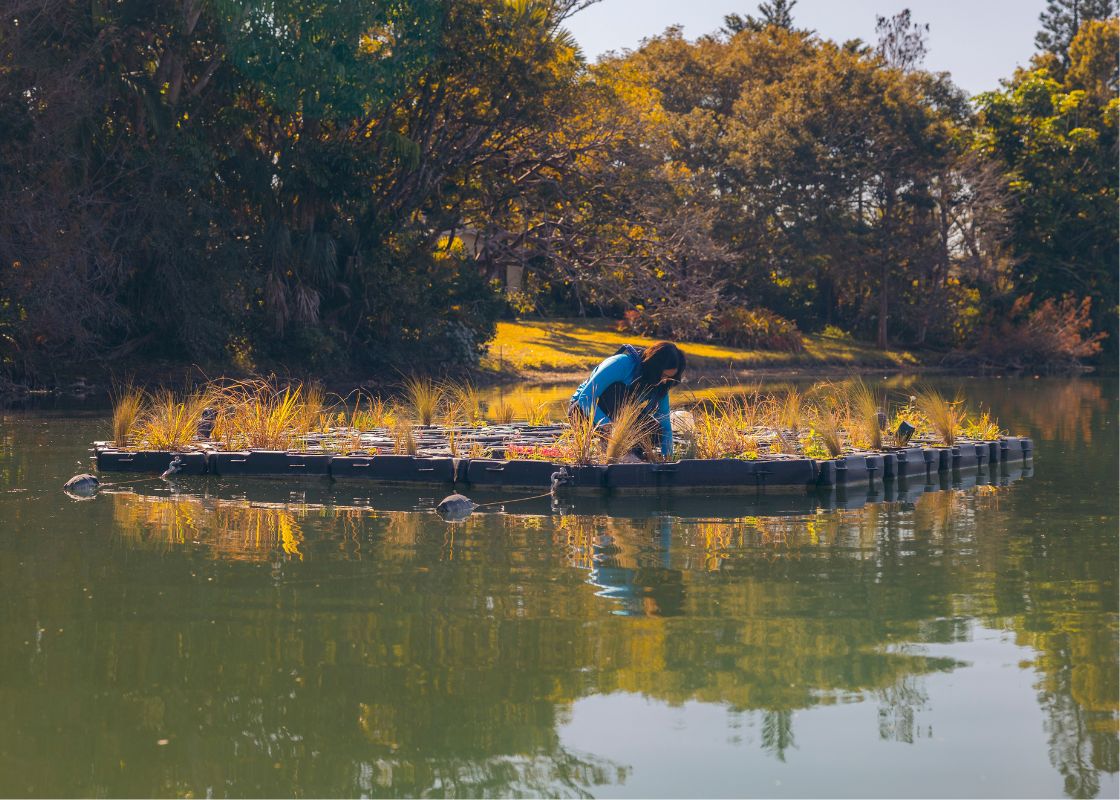
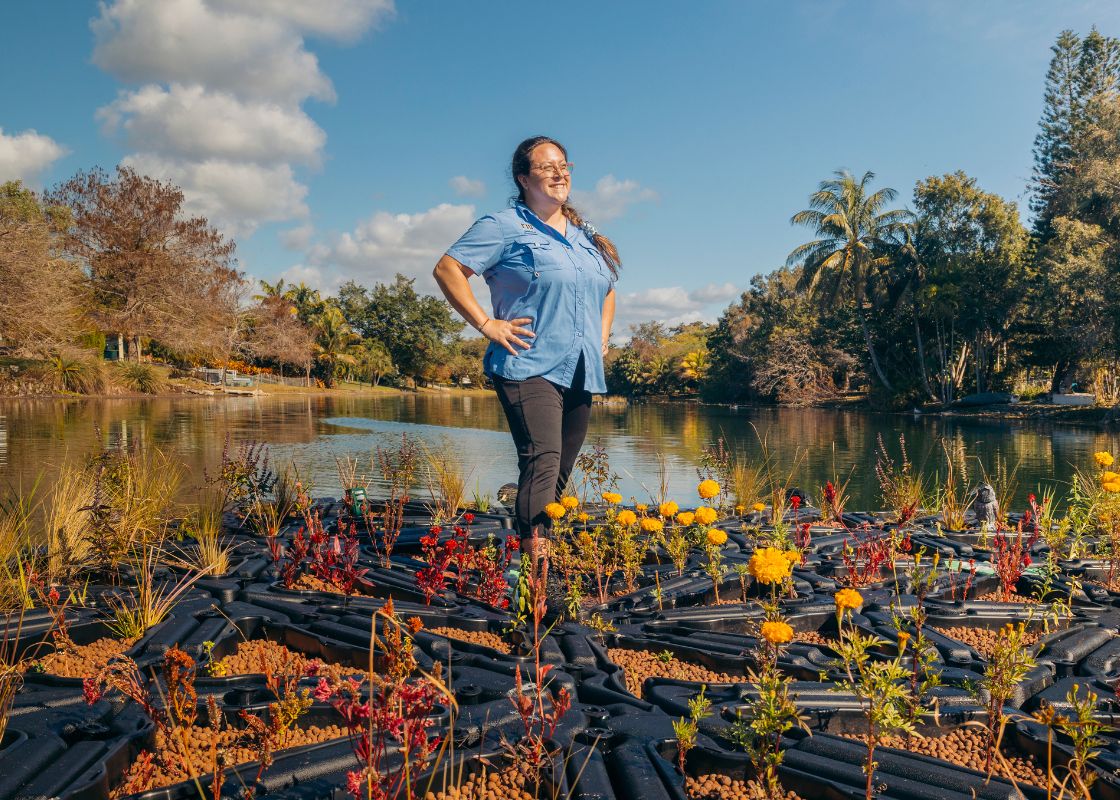
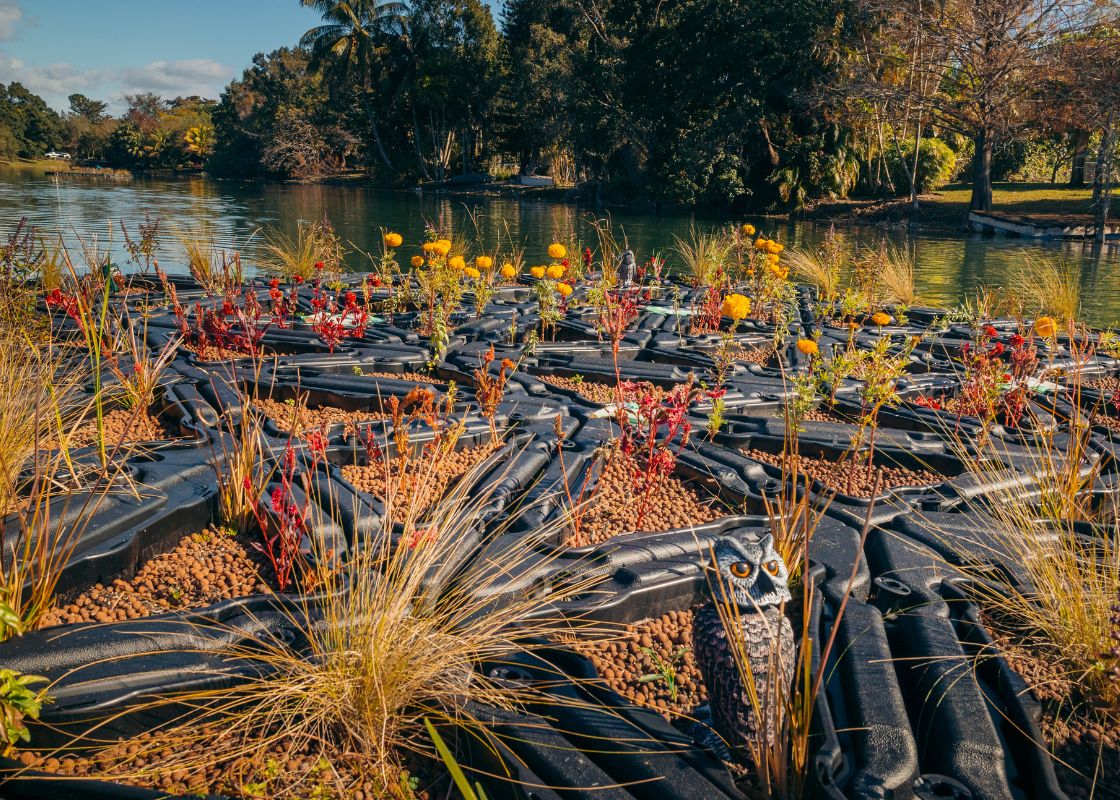
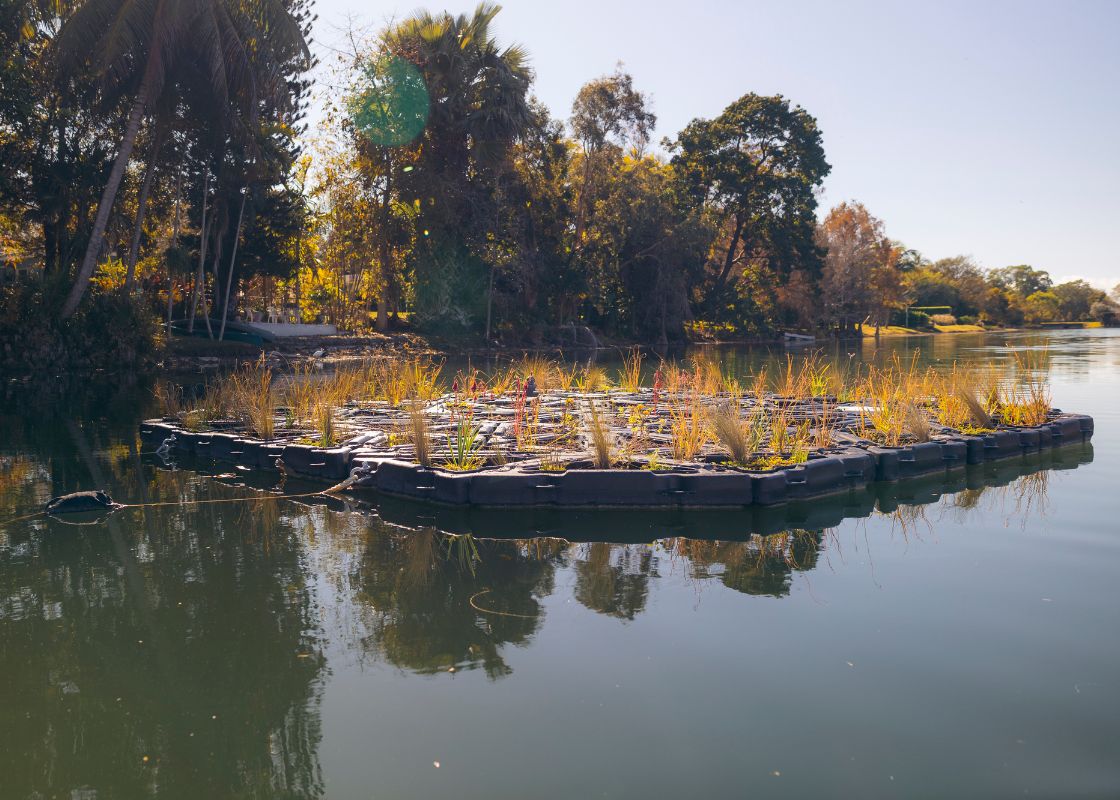
We thank the Florida International University photographer Anthony Sleiman and Green Thumb Strategies LLC’s Jazmin Locke for the imagery of our Floating Treatment Wetlands at Pinecrest Village.
Benefits of Floating Treatment Wetlands in Canal Installations
FTWs are ideal for pilot programs, allowing for reconfiguration, relocation, and the addition of modules to expand asset footprint. The design of the modular platforms enables easy access for maintenance crews, reduces labour requirements, and allows efficient weeding and replanting with removable planter boxes.
This installation serves multiple purposes, improving water quality by reducing nutrient loads and sediment, and supporting the growth of wetland plants and flowers, which will provide canal coverage and reduce the ability of Hydrilla to occupy the water column.
As plants in these Floating Treatment Wetlands grow, their roots extend into the water column, creating a complex network of plant roots and biofilm. These provide natural pathways for stormwater treatment, enhancing nutrient cycling through nitrification and phosphorylation, and capturing sediment.
Floating Treatment Wetlands are a nature-based solution to reduce herbicide spraying requirements as a primary management approach. These existing management strategies carry long-term ecological concerns and recurring operational costs.
Bulls Rush, Blue Iris, and Golden Rod were included in the native plant selections to provide stormwater treatment capabilities. Meanwhile, on the internal planting beds of the FTWs, a range of harvestable flowers will be grown, including Celosia, African Marigold, and Lisanthus. Beautifying the local community, this mix of wetland vegetation and flowers will improve site aesthetics.
A fully traversable system, the ability to walk on the FTW will allow ease of access during routine maintenance, and for the harvesting and replanting of flowers.
As municipalities increasingly prioritise resilient, low-impact stormwater and waterway treatment solutions, Floating Treatment Wetlands offer a proven pathway to combine infrastructure performance with environmental restoration and the development of green stormwater assets.
For Pinecrest, this ongoing pilot project is about developing outcomes for the future — and demonstrating how engineered nature-based stormwater assets can replace legacy herbicide practices, restore urban waterways, create healthy local environments, and renew community spaces.
Together, we can develop stormwater solutions that integrate water treatment technology in our urban landscape – protecting Joy in Water for future generations. We believe clean waterways are a right, not a privilege.